
Lee County Divorce Decree Records
Lee County divorce decree records are held by the Clerk of Superior Court in Leesburg, Georgia. The clerk's office is the primary source for certified copies of final divorce orders, full case files, and all related court documents. Under Georgia's Open Records Act, most divorce records in Lee County are available to the general public without requiring any special status or reason. This page explains how to access those records, what they include, what fees apply, and what Georgia law requires for divorce cases filed in Lee County.
Lee County Divorce Decree Quick Facts
How to Get Lee County Divorce Decrees
The Lee County Clerk of Superior Court is at 100 Leslie Highway, Leesburg, GA 31763. Call (229) 759-6018 for information. The Lee County website may have updated hours and department contacts. Visiting the Leesburg courthouse in person is the most straightforward way to get a certified copy of a divorce decree. Staff can search records by party name or case number while you are there.
When you arrive, bring a government-issued photo ID. Having both parties' full legal names and the approximate year of the divorce will help staff find the record quickly. If you have a case number, provide it. Mail requests are also an option. Send a written request with case details, your return address, and a check or money order for applicable fees to the clerk's address above. Always call before mailing to confirm the current fee amounts.
Note: Lee County is a smaller county, and in-person visits during regular business hours tend to be the fastest way to get the records you need.
What Lee County Divorce Records Contain
A divorce decree issued by the Lee County Superior Court is the judge's final signed order ending a marriage. It contains all the terms the court approved. Property division, debt assignments, any spousal support ordered, and custody and child support arrangements if children were involved all appear in the decree. The full case file at the Lee County clerk's office includes the original petition, any answer or counterclaim filed by the other spouse, motions, temporary orders, financial affidavits, and the final signed decree itself.
A divorce decree and a divorce certificate are two different things. The decree is the court's complete order with all specific terms. A certificate is a short summary from the Georgia Department of Public Health that only confirms the divorce took place. If you need to verify specific terms, such as property division details or custody language, the Lee County courthouse is where you go. If you only need to confirm a divorce happened for a record that falls between 1952 and 1996, the Georgia DPH Vital Records office can help. Contact them at 1680 Phoenix Blvd, Suite 100, Atlanta, GA 30349, or call (404) 657-2700. Outside that date range, the Lee County clerk is the only option.
Lee County Divorce Decree Fees
Copy fees at the Lee County Clerk of Superior Court are in line with Georgia's general schedule. Plain copies run $0.50 to $1.00 per page. Certified copies cost more because they carry the clerk's official seal and signature, which makes them acceptable for legal use. When you request a copy, be clear about whether you need certified or plain. If you are submitting the decree to a court, agency, or financial institution, you almost certainly need the certified version.
For divorces recorded in Georgia between 1952 and 1996, the Georgia Department of Public Health offers a verification service. Visit their Vital Records request page for submission instructions and current fees. The DPH will confirm whether a divorce is on record in the state. It does not provide the full decree. For complete records from Lee County, the Superior Court clerk is the right contact regardless of the divorce year.
Georgia Divorce Laws in Lee County
State law governs how divorce works in every Georgia county, including Lee. The first requirement is residency. Under OCGA 19-5-2, at least one spouse must have lived in Georgia for six months before a divorce petition can be filed. You file in the county where you or your spouse currently lives, not necessarily the county where the marriage happened. The Lee County Superior Court in Leesburg holds jurisdiction over all divorce cases for Lee County residents under OCGA 19-5-1.
Georgia recognizes 13 grounds for divorce under OCGA 19-5-3. The no-fault ground, that the marriage is irretrievably broken, covers most cases. It does not require proving fault by either spouse. Other grounds such as adultery, desertion, and cruel treatment are still listed but are used far less often. No-fault cases are faster to resolve and are standard for uncontested divorces in Lee County.
Once a divorce petition is filed and the other spouse is served under OCGA 19-5-5, Georgia law requires a 30-day waiting period before a final decree can be entered. This applies even when both parties agree on all terms. The clock starts from the date of service or acknowledgment. The Georgia Courts self-help portal has downloadable forms for people who want to handle their own divorce in Lee County. The Georgia Open Records Act ensures that the resulting decree is a public document available to anyone who requests it.
Public Access to Lee County Divorce Records
The Georgia Open Records Act gives any member of the public the right to request divorce records from the Lee County Superior Court clerk. You do not need to be a party to the case and you do not need to explain your reason for requesting the records. The clerk will search the court's files and provide copies for the applicable fee. There is no requirement to prove you have a personal interest in the case.
Some records can be sealed. A judge may seal a file or part of a file to protect the interests of minor children, or when both parties agree to sealing and the court finds good reason. When a file is sealed, the clerk will tell you a case exists but cannot release the contents without a new court order. Routine divorce cases in Lee County are generally not sealed. Standard decrees and case documents are open records under Georgia law.
The screenshot below shows the Georgia DPH Vital Records page, which handles statewide divorce verification for the 1952-1996 period. This is one option for older records when the specific county of filing is unknown.
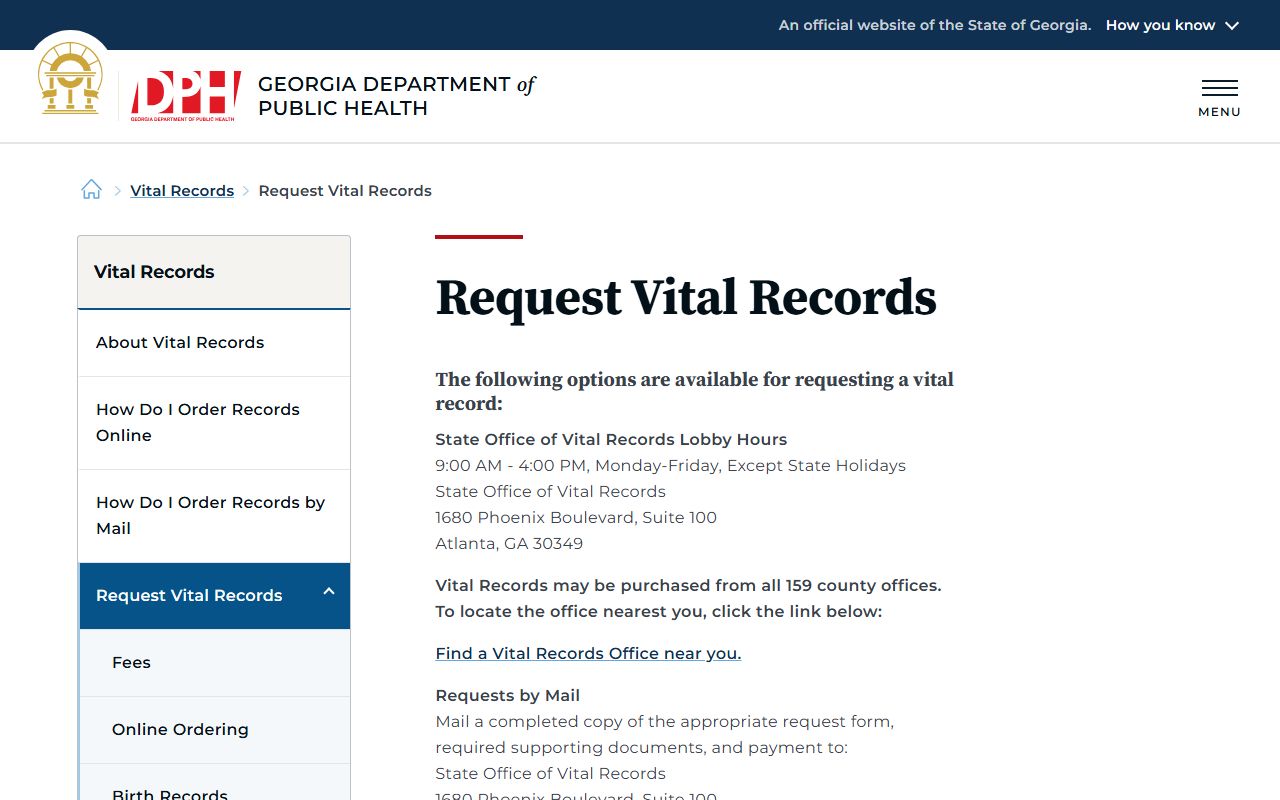
For full decree copies in Lee County, the Superior Court clerk in Leesburg is always the right starting point, regardless of the divorce year or whether a DPH record exists.
Legal Help in Lee County
Free and low-cost legal help is available for Georgia residents who need assistance with a divorce. The Georgia Legal Services Program covers Lee County and handles family law matters including divorce, custody, and related issues. Eligibility is income-based. You can apply through their website or by phone.
Georgia Legal Aid provides online self-help resources and plain-language guides for people handling divorce on their own. Their tools are useful for uncontested cases where the parties agree on all terms. If your case is more complex, involving contested property, retirement funds, or custody disputes, talking to a private attorney is a good idea. The State Bar of Georgia runs a lawyer referral service and can connect you with a family law attorney serving the Lee County area. Start with the Georgia Courts website for court contact information, forms, and guidance on self-represented cases.