
Sumter County Divorce Decree Records
Sumter County divorce decree records are filed and maintained by the Clerk of Superior Court in Americus, Georgia. The clerk holds certified copies of all final divorce orders, the full case files for every divorce action in the county, and a complete docket of proceedings. When you need to find a Sumter County divorce decree, get a certified copy, or look up terms from a past court order, the Americus courthouse is the place to start. This guide explains how to request records, what to expect, applicable fees, and the Georgia laws that govern divorce in Sumter County.
Sumter County Divorce Decree Quick Facts
How to Get Sumter County Divorce Decrees
The Sumter County Clerk of Superior Court is at 500 W. Lamar Street, Americus, GA 31709. You can call the office at (229) 928-4537 to ask about hours, confirm what you need to bring, and find out if any records are available online. The Sumter County website may have updated information about services. Going in person is generally the fastest and most reliable way to get what you need. Staff can search the case records right away and answer questions about the file.
When you request a divorce decree, bring the full legal names of both spouses and the approximate year of the divorce. A case number, if you have it, will speed up the search. You do not need to be a party to the case to request a copy; Georgia's open records rules allow any member of the public to request court records. Bring a valid photo ID. Copy fees are paid at the time of the visit. For certified copies, which are required for most official purposes, let the clerk know specifically that you need certification when you make your request.
Mail requests are an option for those who cannot come in person. Write to the clerk's office with your request details and ask about the current fee schedule. Mail turnaround will be slower than an in-person visit.
What Sumter County Divorce Records Contain
The final divorce decree from Sumter County Superior Court is a binding court order. It ends the marriage and sets out every term the judge approved. Property division is covered in the decree: who receives which assets from the marital estate, who keeps the house, how retirement accounts are handled. Debts are assigned to one party or the other. Alimony, if ordered, is specified in terms of amount and duration. When the couple had minor children, the decree contains the full custody arrangement, the visitation schedule, and the child support amount. All of these terms are enforceable by the court.
Beyond the final decree, the full case file at the Sumter County courthouse includes the original divorce petition, any answer or counterclaim from the other spouse, financial affidavits showing each party's income and assets, motions, temporary orders entered during the case, and parenting plans if children were involved. This broader record can be helpful when you are trying to understand the procedural history of a case or when a dispute has arisen over what the original order meant.
A short divorce certificate from the Georgia Department of Public Health is a separate document. It confirms only that a divorce occurred. If you need the actual terms of the divorce settlement, you need the decree from Sumter County Superior Court, not a state certificate.
Sumter County Divorce Decree Fees
The Sumter County Clerk of Superior Court charges per-page fees for copies of divorce records. Standard copy rates across Georgia county courts typically fall between $0.50 and $2.50 per page. Certified copies cost more because the clerk's official seal and signature are affixed. That certification is required when you intend to use the document in a court proceeding, file it with a government agency, or submit it as part of a name change application. Ask for a certified copy by name when you make your request if you need it for any official purpose.
For divorces registered between 1952 and 1996, the Georgia Department of Public Health maintains a statewide index. Contact their Vital Records office at 1680 Phoenix Blvd, Suite 100, Atlanta, GA 30349, or call (404) 657-2700. Visit the Vital Records page for more details on submitting a verification request. The DPH confirms only that a divorce occurred in Georgia during those years; it does not provide the decree itself. For anything outside that window, the Sumter County clerk is the only source.
Georgia Divorce Laws in Sumter County
Georgia law sets the same rules for divorce across all 159 counties, and Sumter County's Superior Court follows those rules. The foundational requirement is residency. Under OCGA 19-5-2, at least one spouse must have lived in Georgia for six months before a divorce petition can be filed. You file in the Superior Court of the county where you or your spouse currently resides, which is not necessarily the county where you were married.
Georgia recognizes 13 grounds for divorce under OCGA 19-5-3. The most commonly cited in Sumter County and throughout Georgia is that the marriage is irretrievably broken. This is the no-fault ground. It does not require either party to prove any wrongdoing. The other 12 grounds, including adultery, willful desertion, habitual drunkenness, and cruel treatment, require proof and are typically used in contested cases where one party alleges specific misconduct by the other. Most uncontested divorces in Sumter County proceed on the no-fault ground because it is simpler and avoids blame.
After the respondent is served, a mandatory 30-day waiting period runs before a final decree can be issued. This applies in every Georgia divorce, even fully uncontested ones. Self-represented parties can find official divorce forms at the Georgia Courts self-help portal. The authority of Superior Courts to handle divorce actions statewide is established by OCGA 19-5-1.
Georgia's divorce statute, including the 13 grounds at OCGA 19-5-3, is available in full through the Justia legal database.
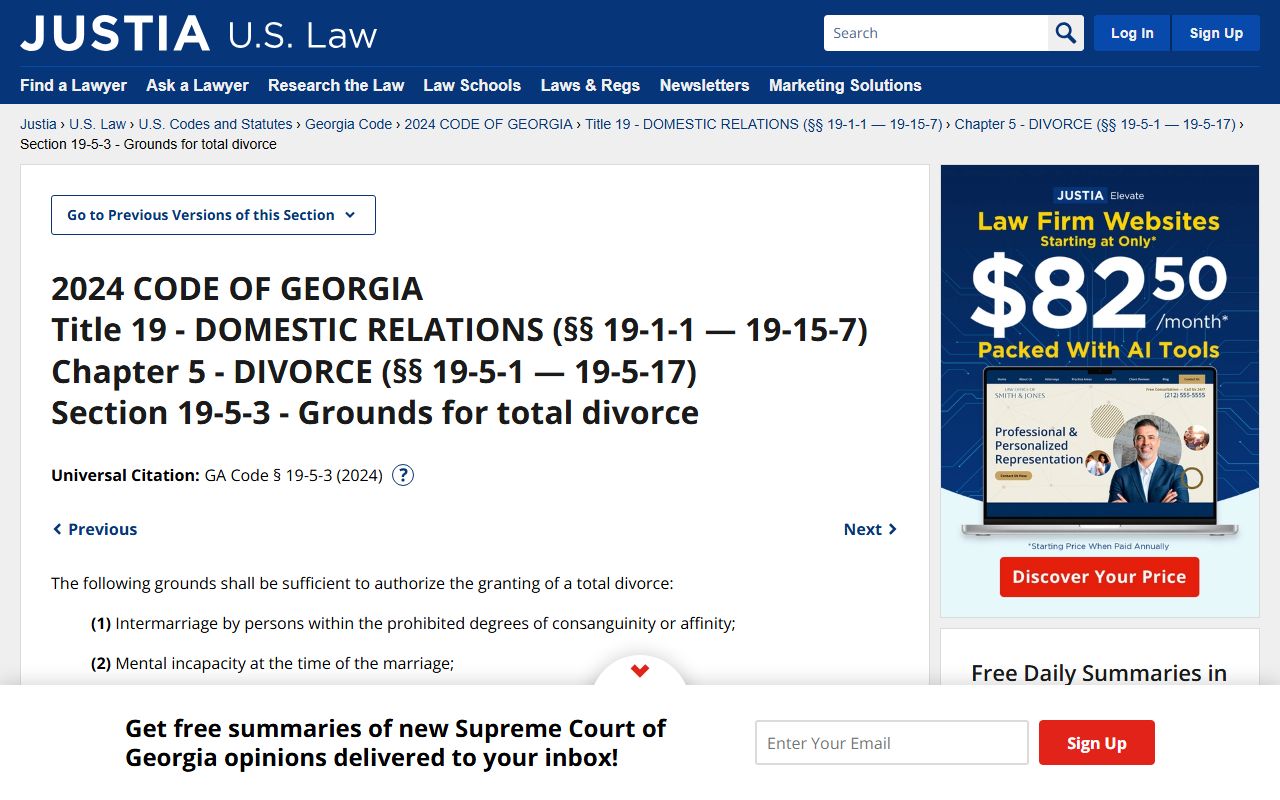
The no-fault option available under this statute is cited in the majority of Sumter County divorce filings and does not require proof of misconduct by either spouse.
Public Access to Sumter County Divorce Records
Georgia's Open Records Act gives any member of the public the right to inspect and copy government records, and divorce decrees filed in Sumter County Superior Court are covered by that right. You do not need a special reason to submit a records request, and you do not need to be connected to the case. The clerk processes your request, locates the file, and provides copies once the applicable fees are paid.
Courts can seal divorce records under limited circumstances. A file may be sealed when it contains sensitive information about minor children, financial data that poses fraud risks, or when both parties have agreed to sealing and the judge has granted it. If a record is sealed, the clerk will acknowledge the case but will not release the contents without a court order. The large majority of Sumter County divorce cases are not sealed, and records are available through a standard request to the clerk's office in Americus.
Legal Help in Sumter County
Americus has local attorneys who handle family law matters. If you cannot afford an attorney, Georgia Legal Services Program provides free legal help to income-eligible residents throughout southwest Georgia, including Sumter County. They assist with divorce filings, custody cases, and related family law matters. Apply online or by phone to find out if you qualify. Georgia Legal Aid offers free online self-help tools and plain-language guides to Georgia divorce law for anyone to use.
If your case involves significant property disputes or custody disagreements, the State Bar of Georgia operates a lawyer referral service that can connect you with a licensed family law attorney in the Sumter County area. The Georgia Courts website provides court directory information, official forms, and guidance for self-represented parties in Superior Court proceedings across the state.