
Access Dunwoody Divorce Decree Records
Dunwoody divorce decree records are kept by the DeKalb County Superior Court in Decatur, which handles all divorce cases filed by Dunwoody residents throughout DeKalb County. If you need to search for a decree, request a certified copy, or verify whether a Dunwoody divorce case is in the public record, this page explains how DeKalb County's clerk system works, what these records contain, and what your options are for getting what you need.
Dunwoody Divorce Decree Quick Facts
DeKalb County Superior Court: Dunwoody Divorce Records
Dunwoody is a DeKalb County city, which means all divorce filings by Dunwoody residents go to the DeKalb County Superior Court. The Clerk of Superior Court stores those records and handles all requests for copies and certifications. The clerk's office is at 556 N. McDonough Street, Decatur, GA 30030. Phone: (404) 371-2261. Website: dksuperiorclerk.com.
One feature that DeKalb County offers is an eCertification portal. Through this system, some certified copies of court documents can be ordered online, which means you may be able to get what you need without making a trip to the Decatur courthouse. Check the clerk's website for details on what's available through eCertification and what information to include in the request. For records that can't be ordered online, in-person visits and mail requests are available.
For in-person visits, bring a photo ID and whatever case details you have. The clerk's index is searchable by party name, so you don't need the case number to start. That said, knowing the case number and approximate filing year will make the search faster. The clerk's staff won't advise you on the legal meaning of what's in the record, but they can confirm what documents are in the file and how to request copies.
The DeKalb County Superior Court Clerk website is the main resource for Dunwoody residents who need to search case records or request certified divorce decree copies through the eCertification portal.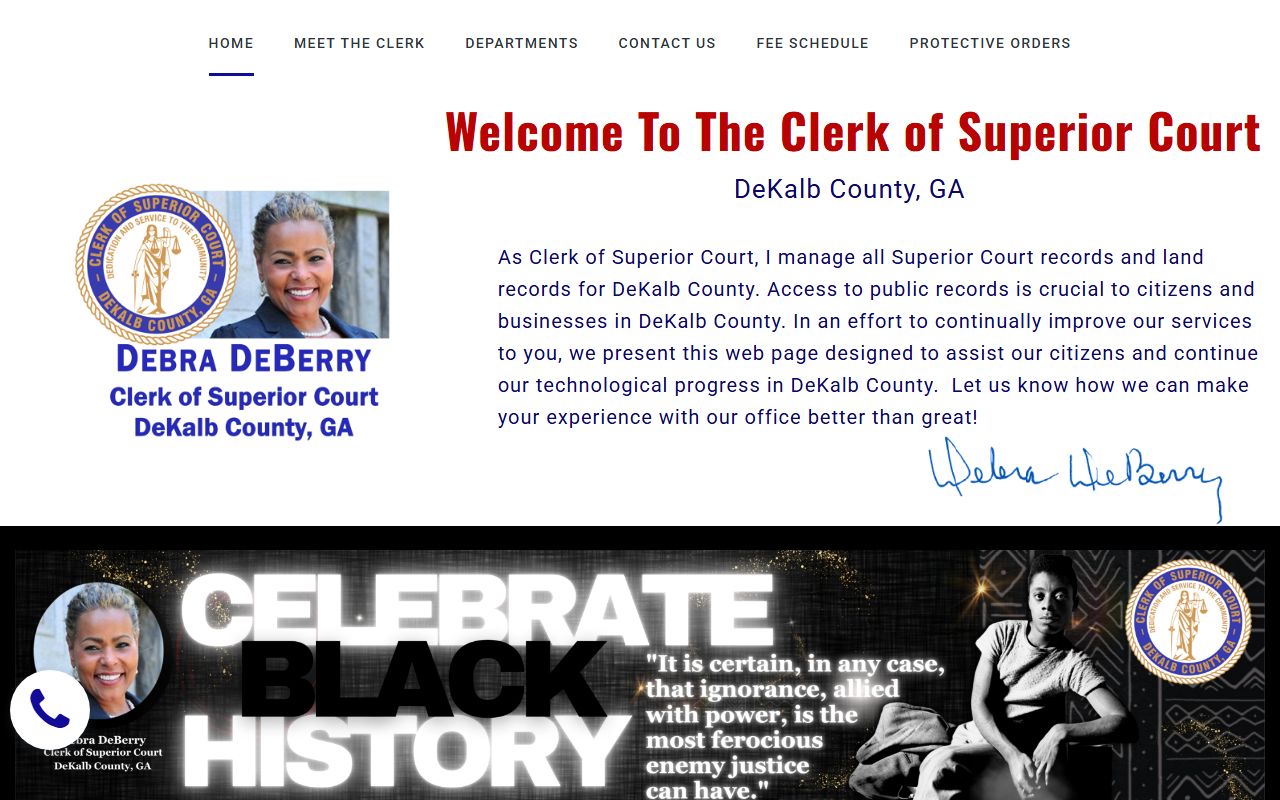
This screenshot shows the DeKalb County Superior Court Clerk's website, where Dunwoody residents can find eCertification tools and case search options for divorce decree records.
Dunwoody Divorce Decree: What the Records Include
The divorce decree is the final order a judge signs at the end of a divorce case. It's the official document that ends the marriage and lays out every condition the court imposed. A short certificate only confirms the divorce happened. The decree is the full document, and its terms are legally enforceable after the case is closed.
What's in a Dunwoody divorce decree depends on the facts of the case, but standard elements include both parties' full legal names, the date the divorce was granted, the stated grounds, how marital property was split, debt allocation, any alimony awards, and if children were part of the case, all custody and support terms. A name change order, if one was granted, also appears here. Settlement agreements that the parties negotiated prior to final hearing are often incorporated into the decree as court orders.
Post-decree modifications are a real thing, and they matter. If custody arrangements or support amounts changed after the original decree was entered, those changes are filed as additional documents in the same case file. The original decree doesn't disappear; the modifications amend it. If you need to know the current terms of any post-decree arrangement, ask the clerk whether modifications exist before assuming the original decree is the last word.
Georgia Law and Dunwoody Divorce Cases
Georgia law is clear: only Superior Courts can grant divorces. Under OCGA 19-5-1, jurisdiction for divorce and alimony matters belongs exclusively to the Superior Court. In Dunwoody's case, that's the DeKalb County Superior Court. No other court level can handle a divorce filing in Georgia.
Before filing, at least one spouse must have been a Georgia resident for six continuous months. That's the requirement under OCGA 19-5-2. Once the petition is filed and the other party is served, a mandatory 30-day waiting period begins. The court can't sign the final decree until that period ends, regardless of whether both parties are in full agreement.
Georgia has 13 grounds for divorce spelled out in OCGA 19-5-3. The no-fault ground, "irretrievably broken," is by far the most commonly used in DeKalb County, including Dunwoody. Fault-based grounds are available but less frequent. All divorce petitions must be submitted as written, verified documents under OCGA 19-5-5. Self-represented filers can find official forms at georgiacourts.gov/a2j/self-help-resources/family-law/divorce-forms/.
Georgia Courts and Dunwoody Divorce Resources
The Georgia Courts website at georgiacourts.gov is a useful resource for anyone dealing with a divorce case in Dunwoody or elsewhere in the state. It provides links to court-specific resources, approved family law forms, and plain-language explanations of the divorce process. For self-represented filers, the site's self-help section is a good first stop before visiting the clerk's office.
The site also links to each county court and has general information about how Georgia's court system is structured. Knowing which court handles what can save time and frustration, especially when you're not sure whether your question needs to go to the Superior Court, the probate court, or another office.
The Georgia Courts main website provides statewide court information including divorce forms and resources relevant to Dunwoody and DeKalb County cases.
This screenshot shows the Georgia Courts website, which is the statewide hub for self-help resources and court information for Dunwoody divorce decree cases.
Open Records Access for Dunwoody Divorce Decrees
Divorce records in Georgia are public. The Georgia Open Records Act at OCGA 50-18-70 makes court records available to the public. Any person can request a copy of a divorce decree from the DeKalb County Superior Court clerk. No stated reason is required, and you don't have to be a party to the case.
There are narrow exceptions. If a judge sealed portions of a case record, or if certain exhibits were filed under a protective order at the time of the case, those portions aren't available. Some materials tied to cases involving minor children may also be restricted. But the decree itself is generally open and accessible to anyone who asks. If a record appears restricted, the clerk will tell you what portions are available for review.
Note: The DeKalb County clerk's eCertification portal may provide the fastest route for obtaining a certified copy of a Dunwoody divorce decree if the record is available in their online system.
Legal Help for Dunwoody Residents
Free legal help is available for qualifying Dunwoody residents through the Georgia Legal Services Program. Their services cover low-income Georgians in civil legal matters including family law and divorce. Website: glsp.org. They cover DeKalb County, and contacting them early gives you a better chance of getting assistance before case filing deadlines approach.
Georgia Legal Aid at georgialegalaid.org offers detailed guides on the Georgia divorce process. These are written in plain terms and cover everything from which forms to file to what happens at a hearing. For Dunwoody residents considering a self-represented filing in DeKalb County Superior Court, the site's family law section is a practical starting point.
The State Bar of Georgia at gabar.org provides a lawyer referral service and a searchable attorney directory. If your case involves contested property, custody disputes, or a party who isn't cooperative, getting legal advice from a licensed family law attorney who handles DeKalb County cases is worth the time and expense.