
Chamblee Divorce Decree Lookup
Chamblee divorce decree records are filed and maintained by the DeKalb County Superior Court, the court with jurisdiction over all divorce cases in Chamblee and throughout DeKalb County. If you need to search for, access, or obtain a certified copy of a divorce decree linked to a Chamblee case, this guide explains where to go, what's in the records, what Georgia law requires, and how to get legal help if you need it.
Chamblee Divorce Decree Quick Facts
DeKalb County Superior Court: Chamblee Divorce Records
Every divorce filed by a Chamblee resident is a DeKalb County Superior Court case. The Clerk of Superior Court's main office is at 556 N. McDonough Street, Decatur, GA 30030, which is the county seat. You can reach the clerk by phone at (404) 371-2261. Their official website is dksuperiorclerk.com. The site is where you'll find information on case searches, certified copy requests, and office hours.
One useful feature DeKalb County offers is an eCertification portal. This lets you order certified copies of divorce decrees online without visiting the courthouse in person. If you need a certified copy for legal purposes, the online portal can be a convenient option. Check the clerk's website for current availability and any applicable fees for online requests versus in-person pickup.
For in-person visits, bring a photo ID and know the names of both parties and the approximate year the divorce was granted. That information helps staff locate the right file in the county's case index. Walk-in searches are welcome during business hours.
The DeKalb County Superior Court Clerk website below shows the official portal where Chamblee residents can search divorce case records and use the eCertification system to order certified copies.
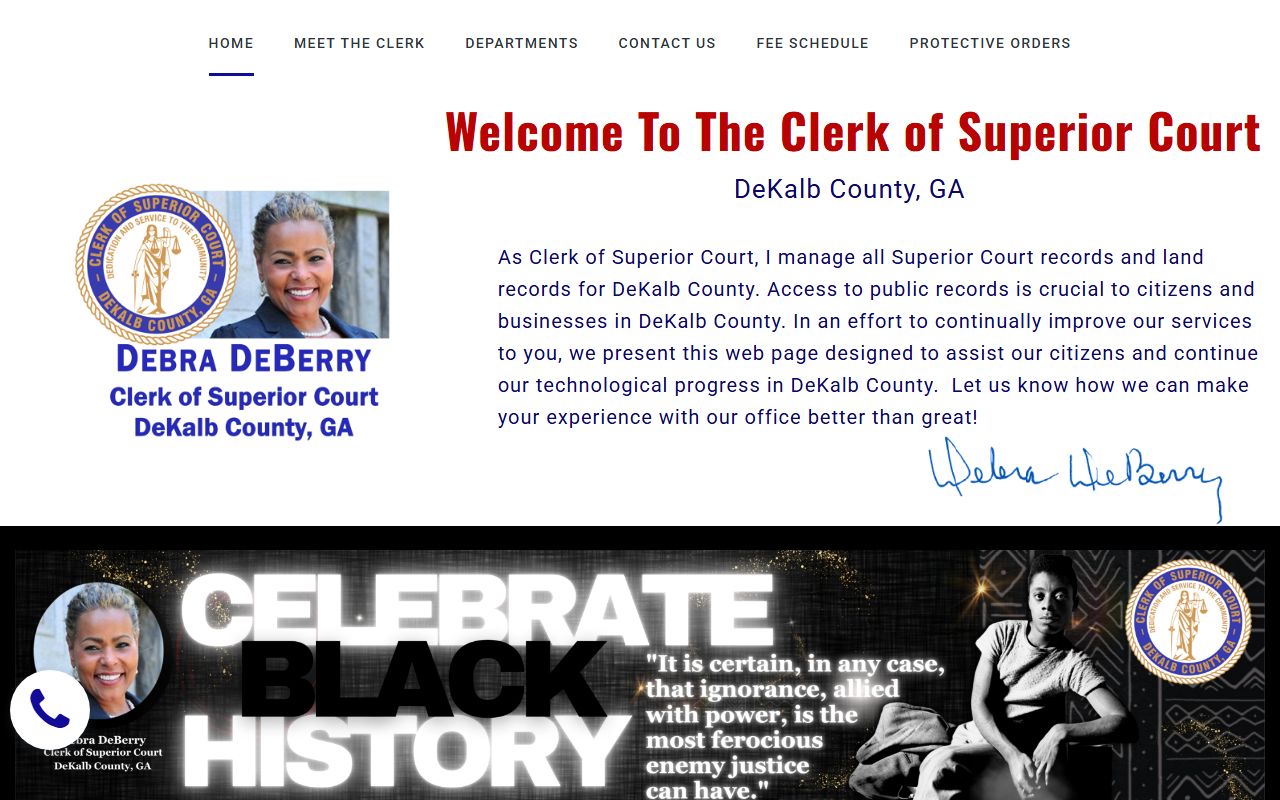
The site includes links to case search tools, the eCertification portal, and contact information for the clerk's office.
What's Inside a Chamblee Divorce Decree File
The divorce decree is the judge's final written order. It's the document that legally ends the marriage and sets out the terms both parties must follow going forward. For a Chamblee case, the decree will cover property division, any debt responsibilities, alimony if awarded, and, when children are involved, custody arrangements, a parenting plan, and child support amounts.
The full case file at the DeKalb County clerk's office includes more than just the final decree. You'll find the original petition for divorce, the other spouse's answer, any temporary orders entered during the case while it was still pending, financial disclosure forms, and any separation or settlement agreement the parties signed. All of those records are part of the public court file.
Some records can be sealed. A judge may restrict access to portions of a file involving minor children's personal details or sensitive protective matters. If you search for a specific document and it isn't there, ask the clerk whether any part of the file is under restriction.
Note: A divorce decree is not the same as a Georgia divorce certificate issued by the state health department. The decree is the court order with all the case terms. A certificate is a shorter document issued for summary identification purposes only.
Georgia Divorce Statutes That Govern Chamblee Cases
Georgia's Superior Courts have exclusive jurisdiction over divorce cases under OCGA 19-5-1. That's why every Chamblee divorce is a DeKalb County Superior Court case. No other court in the state has the authority to grant a divorce.
Under OCGA 19-5-2, at least one spouse must have been a Georgia resident for six months before the divorce petition is filed. For Chamblee residents, that means six months of continuous residency in Georgia. If both spouses meet that requirement, either can file, and the case goes to the Superior Court in the county where either spouse lives.
The screenshot below shows the Georgia OCGA divorce statutes that apply to Chamblee cases, including the grounds for divorce and procedural rules under Title 19, Chapter 5.
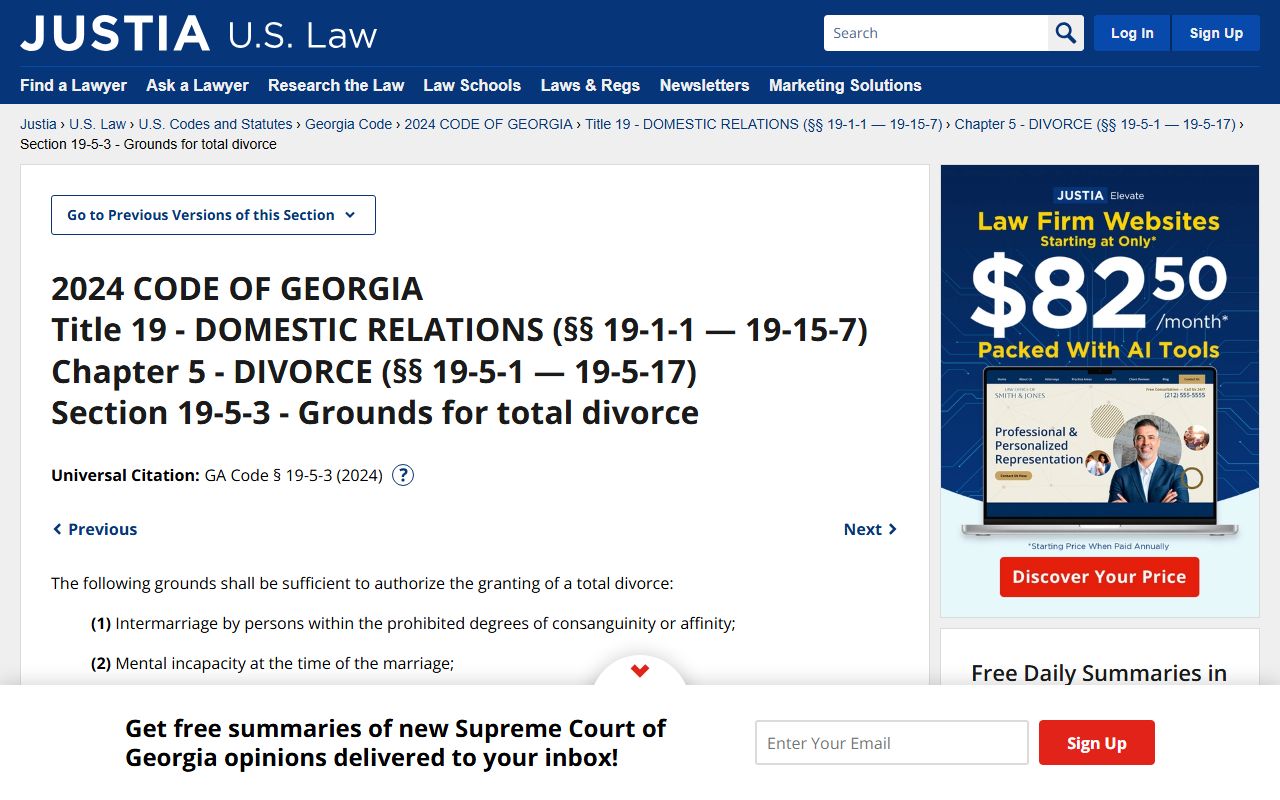
The statute listing covers all 13 grounds for divorce, the residency requirements, and the procedural rules that apply in every DeKalb County case.
Georgia lists 13 grounds for divorce under OCGA 19-5-3. Most Chamblee filers use the no-fault ground, which states the marriage is irretrievably broken. It's straightforward and doesn't require either party to prove wrongdoing. Fault grounds like adultery or desertion are available and can affect alimony, but they're harder to prove and generally make the case more contentious.
After the respondent is served with divorce papers, Georgia requires a minimum 30-day waiting period before the court can issue a final decree. More complex cases take longer. The petition must be in writing and verified under oath, per OCGA 19-5-5. These rules apply to every divorce case filed in DeKalb County, including those from Chamblee residents.
Public Access and Open Records for Chamblee Divorces
Divorce decrees filed in DeKalb County are public records. Georgia's Open Records Act, OCGA 50-18-70, gives any person the right to inspect and copy government records, including court files. You can walk into the DeKalb County clerk's office or use the online eCertification portal and request any unrestricted divorce case record.
Courts can seal specific portions of a file in limited situations. Records involving children's personal information or other sensitive matters may be restricted. But even when some portions are sealed, the case name and basic information are usually still visible in the public index. Ask the clerk if you hit a dead end during your search.
Georgia Courts offers general self-help resources and court information at georgiacourts.gov. Divorce forms are available at georgiacourts.gov/a2j/self-help-resources/family-law/divorce-forms/. Reviewing the forms gives you a clear picture of what types of documents are typically found in a Georgia divorce case file.
Legal Help for Chamblee Divorce Matters
If you need assistance with a divorce in Chamblee, Georgia Legal Services Program at glsp.org provides free legal help for low-income residents in DeKalb County. They handle family law cases and can assist with filing questions, forms, and legal guidance.
Georgia Legal Aid at georgialegalaid.org has a searchable directory of legal resources organized by county. The State Bar of Georgia at gabar.org offers a lawyer referral service for those looking to hire a private attorney. Many family law attorneys in the DeKalb and Atlanta area offer initial consultations at low or no cost, which can help you understand your options without committing to full representation.
If you and your spouse agree on all the terms of the divorce, handling the case without an attorney is possible using the official forms from Georgia Courts. Uncontested divorces are the most common type handled pro se in Georgia courts.