
McDuffie County Divorce Decree Records
McDuffie County divorce decree records are stored at the Clerk of Superior Court in Thomson, Georgia. The clerk's office is the primary source for certified copies of final divorce orders, complete case files, and any documents submitted during divorce proceedings. Georgia law makes most of these records available to the public, and no special status is needed to request them. This page explains how to get McDuffie County divorce records, what they contain, the applicable fees, Georgia statutes that govern these cases, and where to find legal help in the county.
McDuffie County Divorce Decree Quick Facts
How to Get McDuffie County Divorce Decrees
The McDuffie County Clerk of Superior Court is at 349 Main Street, Thomson, GA 30824. The phone number is (706) 595-2100. The McDuffie County website may have updated contact information and hours. In-person visits to the Thomson courthouse are the most direct way to request certified copies of divorce records. Staff can search by party name or case number on the spot.
When you visit, bring a valid photo ID. The full legal names of both parties and an approximate year of the divorce will help staff locate the record quickly. A case number, if available, speeds the search. Mail requests are also accepted. Write to the clerk at the Thomson address with your case details, return address, and payment for the applicable fees. Call ahead to confirm current fee amounts before sending payment.
Note: McDuffie County is a mid-size Eastern Georgia county. Call before visiting to confirm office hours and any specific procedures the clerk's office currently follows.
What McDuffie County Divorce Records Contain
A divorce decree from the McDuffie County Superior Court is the judge's final signed order ending a marriage. It contains all the terms the court approved: property and debt division, whether alimony is awarded, and the full custody and child support arrangement if children are involved. The complete case file at the clerk's office includes the original petition, any answer filed by the other spouse, motions, temporary orders, financial affidavits, and the final decree.
Many people confuse a divorce decree with a divorce certificate. A decree is the court's full order with all the case details. A certificate is a short document from the Georgia Department of Public Health that only confirms a divorce occurred. If you need specific terms from a McDuffie County divorce, the Thomson courthouse is where you go. The Georgia DPH Vital Records office at 1680 Phoenix Blvd, Suite 100, Atlanta, GA 30349, phone (404) 657-2700, handles statewide verifications for divorces between 1952 and 1996. Outside that window, the county clerk is your only source.
The screenshot below shows the Georgia DPH Vital Records page, one source for verifying older divorces recorded statewide.
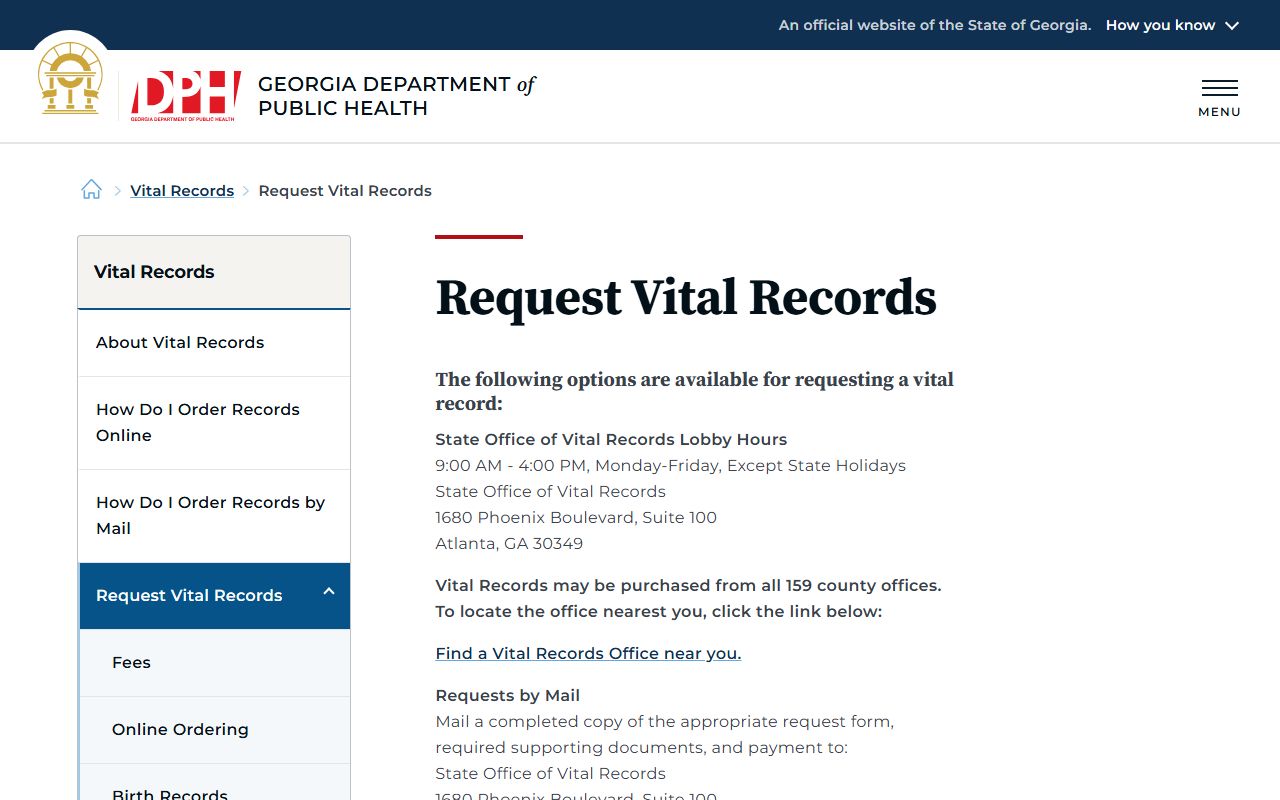
For full copies of any McDuffie County divorce decree, the Superior Court clerk in Thomson is the right office to contact, regardless of when the divorce was filed.
McDuffie County Divorce Decree Fees
Copy fees at the McDuffie County Clerk of Superior Court are consistent with Georgia's general schedule. Plain copies typically cost $0.50 to $1.00 per page. Certified copies cost more because they carry the clerk's official seal and signature. A certified copy is required when you are submitting the document to a court, a government agency, or a financial institution. Always clarify which type of copy you need before paying.
The Georgia Department of Public Health offers a statewide verification service for divorces recorded from 1952 to 1996. Visit their request page for submission information and current fees. The DPH issues a letter confirming a divorce but does not provide the actual decree. For full copies of any McDuffie County divorce record, the Superior Court clerk in Thomson handles all requests.
Georgia Divorce Laws in McDuffie County
Georgia's divorce statutes apply throughout the state, including McDuffie County. The residency requirement is the first hurdle. Under OCGA 19-5-2, at least one spouse must have lived in Georgia for six months before filing. You file in the county where you or your spouse currently lives. The McDuffie County Superior Court in Thomson holds jurisdiction over all divorce cases for county residents under OCGA 19-5-1.
Georgia recognizes 13 grounds for divorce under OCGA 19-5-3. The no-fault ground, that the marriage is irretrievably broken, is by far the most common. It requires no proof of wrongdoing. Other grounds including adultery, desertion, and cruel treatment are available but rarely pleaded. After the petition is filed and the other spouse is served under OCGA 19-5-5, Georgia requires a 30-day waiting period before a final decree can be entered. This applies even to fully uncontested cases. The Georgia Courts self-help portal has divorce forms. The Georgia Open Records Act ensures the resulting records are available to the public.
Public Access to McDuffie County Divorce Records
Georgia's Open Records Act gives any member of the public the right to request divorce records from the McDuffie County Superior Court. You do not need to explain why you want the records or show any connection to the case. The clerk will search and provide copies for the applicable fee. Calling or visiting the Thomson courthouse is typically the most reliable approach for getting records.
Some records can be sealed. If a judge orders a file sealed, usually to protect minor children or when both parties agree and the court approves, the clerk will confirm the case exists but will not release the contents without a new court order. Most routine divorces in McDuffie County are not sealed. Standard divorce decrees are public records that anyone can access.
Legal Help in McDuffie County
Residents of McDuffie County who need legal help with a divorce have several options. The Georgia Legal Services Program serves East Georgia including McDuffie County and offers free or low-cost help to low-income residents for family law matters. Income limits apply. You can apply online or by phone.
Georgia Legal Aid offers self-help tools and plain-language guides for people handling their own divorce in Georgia. These resources are most useful for straightforward uncontested cases. For contested divorces involving property, retirement accounts, or custody disputes, talking to a private attorney is worthwhile. The State Bar of Georgia operates a lawyer referral service that can connect you with a family law attorney who practices in or near McDuffie County. The Georgia Courts website also has court contacts and forms for self-represented parties filing in McDuffie County Superior Court.