
Columbus Georgia Divorce Decree
Columbus divorce decree records are on file with the Muscogee County Superior Court, which serves as the court of record for all divorce cases filed in the Columbus-Muscogee consolidated government area. If you need to find a divorce decree, get a certified copy, or look up case details from a Columbus divorce, this guide covers the court's location and procedures, what a decree contains, how Georgia law applies, and where to find legal help.
Columbus Divorce Decree Quick Facts
Muscogee County Superior Court: Columbus Divorce Records
The Muscogee County Superior Court is where Columbus divorce decrees are filed and stored. The court is at 3111 Citizens Way, Columbus, GA 31906. Their phone number is (706) 653-4370, and office hours are Monday through Friday, 8:30 a.m. to 5:00 p.m. The court's website is muscogeecourts.com.
One important notice from the court: scammers sometimes pose as court officers and contact people claiming they owe immediate payment by phone. The court has made clear it will never demand immediate payment by phone. If you get such a call, don't pay. Contact the clerk's office directly using the number above to verify any court-related communications.
To request a divorce decree, contact the clerk's office during business hours. Have the names of both parties ready, along with the approximate year of the divorce or the case number if you know it. In-person requests allow you to view records directly and ask staff questions. Mail requests are also accepted. Certified copies carry the official court seal and are what you'll need if a decree must be submitted somewhere official.
Columbus is a consolidated city-county government, which means city and county services are unified. For divorce records, that doesn't change anything. All divorce cases in the Columbus area go through the Muscogee County Superior Court, and that's where the records live.
The Muscogee County courts website is where to start for Columbus divorce decree records and case search tools.
The Muscogee County courts website provides contact information, filing resources, and guidance for searching Columbus divorce decree cases.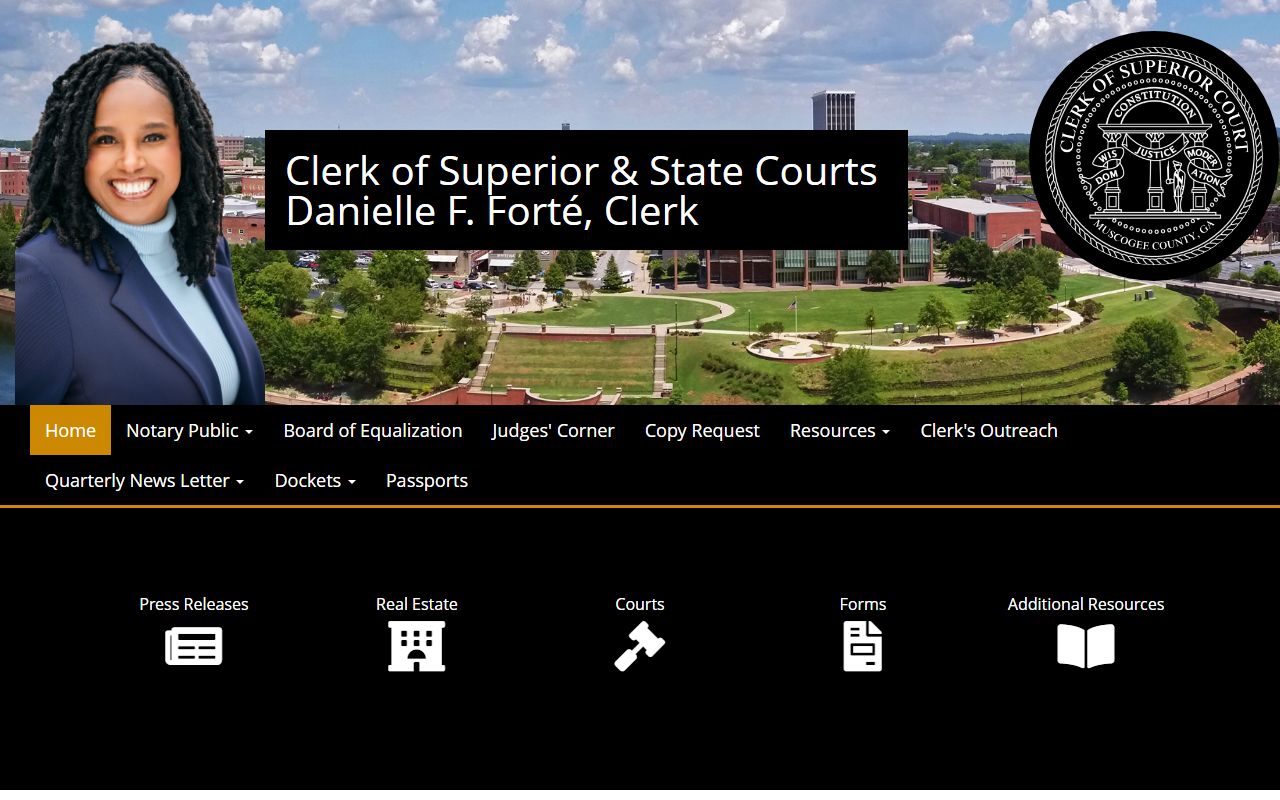
This screenshot shows the Muscogee County courts site, the official source for Columbus divorce records and the first stop for anyone searching for a decree in this area.
What's in a Columbus Divorce Decree
A divorce decree is the court's final written order that ends a marriage. It's more than just confirmation that a divorce happened. It's a binding legal document with specific terms that both parties must follow.
A typical Columbus divorce decree includes the names of both spouses, the date the court granted the divorce, the legal grounds for the divorce, and all the court's rulings on property division, debt allocation, and if children were involved, custody arrangements, visitation schedules, and child support amounts. If one spouse was awarded alimony, the decree spells out the amount and schedule. Name changes, if requested, are also documented in the decree.
This is different from a short divorce certificate, which simply confirms the divorce took place. A certificate works fine for things like applying for a marriage license again or updating a driver's license. But if you need to prove what custody terms were set, or show a court what support was ordered, you need the full decree from the Muscogee County clerk.
If the case was later modified, those modification orders are separate court filings. They're part of the same case, but they're not automatically included when you request the original decree. Ask the clerk if you need all filings under a case number, not just the final decree.
Georgia Divorce Law and Columbus Cases
Georgia law is the foundation for every divorce filed in Columbus. Under OCGA 19-5-1, the Superior Court is the only court in Georgia with authority to grant divorces. The Muscogee County Superior Court holds that authority for Columbus cases.
Before filing for divorce in Columbus, at least one spouse must have been a Georgia resident for six months. That's the residency requirement in OCGA 19-5-2. Once the petition is filed and the other party is served, a 30-day window opens. The court can't finalize the divorce until that 30 days passes. This gives the other party time to respond. If they don't, the petitioner can move forward with an uncontested hearing.
Georgia recognizes 13 different grounds for divorce under OCGA 19-5-3. The most common one people use is "irretrievably broken," which is the no-fault option. No one has to prove fault. The petitioner just declares the marriage can't be saved. The divorce petition must be a written document that the filer verifies, as set out in OCGA 19-5-5.
Georgia Courts provides divorce forms and guidance that apply directly to Columbus cases filed in Muscogee County.
The Georgia Courts divorce forms page has official forms for uncontested and contested cases that are used in Muscogee County Superior Court.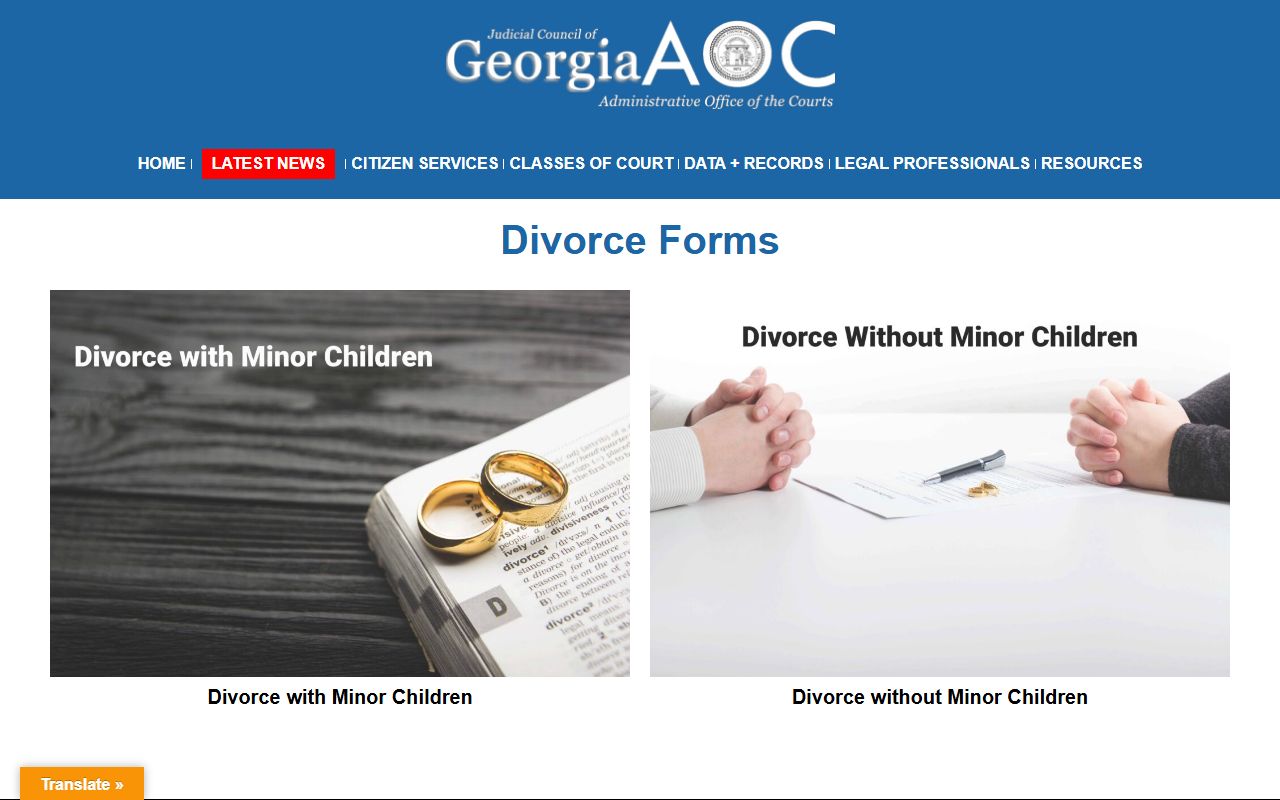
Georgia Courts offers standardized divorce forms used in courts across Georgia, including the Muscogee County Superior Court that handles Columbus divorce decrees.
Open Records and Public Access in Columbus
Divorce decrees filed in Columbus are public records. Georgia's Open Records Act at OCGA 50-18-70 gives anyone the right to request and inspect court records. You don't need to be a party to the case. You don't need to explain why you want the records. Most Columbus divorce decrees can be obtained by any member of the public.
There are a few exceptions. A judge can order records sealed. That's more common in cases involving sensitive information about children or financial details that warrant confidentiality. The clerk can tell you if a record is sealed. Getting access to sealed records typically requires a court order, and those requests go back to a judge.
For divorces that happened between 1952 and 1996, the Georgia Department of Public Health can confirm the divorce occurred. Their address is 1680 Phoenix Boulevard, Suite 100, Atlanta, GA 30349, phone (404) 657-2700, and website dph.georgia.gov/VitalRecords. But as they note, they can confirm divorces while full copies stay with the Clerk of Superior Court in the county where the divorce was granted. For Columbus cases, that's Muscogee County.
Note: The DPH verification is only useful for records from that specific time range. For older or more recent records, go directly to the Muscogee County clerk.
Legal Help for Columbus Divorce Cases
Several organizations offer legal help in the Columbus area. Georgia Legal Services Program at glsp.org provides free legal assistance to people who meet income guidelines. Their offices serve the western Georgia region where Columbus is located. If you need help understanding a decree, filing a modification, or enforcing an existing order, they're a good first call.
Georgia Legal Aid at georgialegalaid.org has online resources and local office information. Their site covers family law topics in plain language, which helps if you're trying to navigate the process without a lawyer. The State Bar of Georgia at gabar.org has a lawyer referral service where you can find family law attorneys in the Columbus area who handle divorce and post-decree matters.
Official Georgia divorce forms are at georgiacourts.gov/a2j/self-help-resources/family-law/divorce-forms/. These are the forms the Muscogee County court uses. If you're handling your own case, make sure you download and use the right version. Outdated or incorrect forms get rejected at the clerk's window.