
Albany Divorce Decree Records
Albany divorce decree records are kept by the Dougherty County Superior Court, which handles all divorce filings for Albany residents and anyone else living in Dougherty County. If you need to find or get a copy of a divorce decree tied to an Albany case, this page covers where to search, what those records contain, how Georgia law applies, and what free legal help is available to you.
Albany Divorce Decree Quick Facts
Dougherty County Superior Court: Albany Divorce Records
All Albany divorce decrees are stored by the Clerk of Superior Court in Dougherty County. This is where you go to request copies, search case indexes, or verify that a divorce took place. The clerk's office is located at 225 Pine Avenue, Albany, GA 31701. You can reach them by phone at (229) 431-3211. Their official website is dougherty.ga.us.
To get a copy of a divorce decree, you'll need to provide the names of both parties and, if you have it, the case number and approximate year the divorce was filed. Walk-in visits are accepted during regular business hours. Staff can help you search the court index if you don't have the full case information, though they can't give legal advice. Bringing a valid photo ID is standard practice when requesting records in person.
Mail requests are also an option. Contact the clerk's office ahead of time to confirm the current fee schedule and what information to include with your written request. Fees apply for certified copies, and processing times can vary depending on how far back the case goes and how busy the office is at the time.
The Dougherty County official website is where you'll find contact details and additional court information for Albany area divorce decree searches.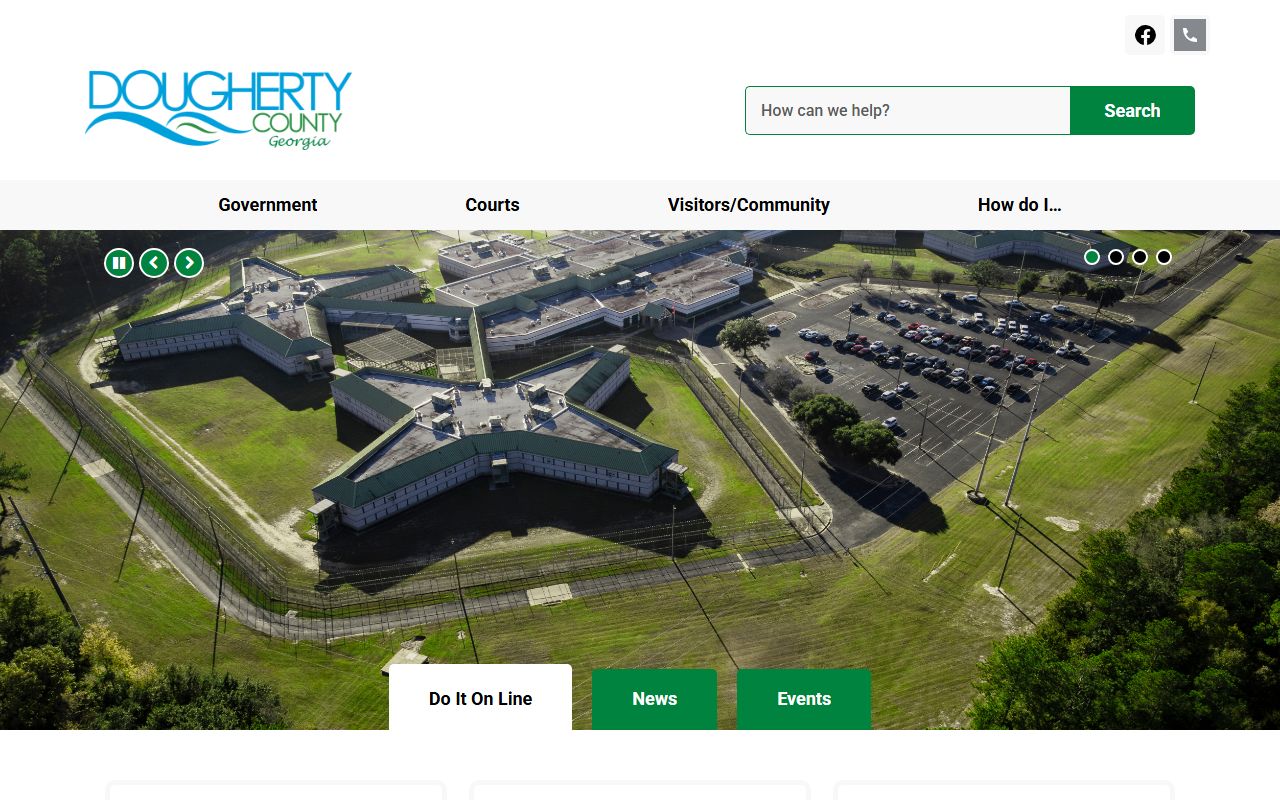
This screenshot shows the Dougherty County website, where Albany residents can find contact information and resources related to Superior Court divorce records.
What Albany Divorce Decrees Contain
A divorce decree is the actual final court order. It's not the same as a short divorce certificate, which just confirms that a divorce occurred. The decree is the full legal document, and it carries real weight. Courts, banks, and government agencies often ask for certified copies because the decree spells out the exact terms of the case.
Inside a typical Albany divorce decree, you'll find the names of both parties, the date the divorce was granted, the grounds stated in the petition, how the court divided property and debts, any alimony or spousal support terms, and child custody and support arrangements if children were involved. If either party requested a name change as part of the case, that order is in the decree too.
Post-decree modifications are a separate thing. If custody or support was changed after the original decree was entered, those modification orders are filed separately with the clerk. Make sure you ask for the most current order if the case had changes after the original judgment. The clerk's office can tell you whether any modifications are on file.
Certified copies carry an official court seal. Uncertified copies are fine for personal reference but won't be accepted by most agencies or courts that need to verify the decree's authenticity.
Georgia Divorce Law and Albany Cases
Under OCGA 19-5-1, Superior Courts are the only courts in Georgia with authority to grant divorces. That applies in Albany just like everywhere else in the state. No other court level can hear a divorce case or issue a final decree.
Georgia law requires that at least one spouse must have lived in the state for six continuous months before filing. That's the residency rule under OCGA 19-5-2. Once the petition is filed and served on the other party, a 30-day waiting period kicks in before the court can enter a final divorce decree. There are no exceptions that shorten this window. Once those 30 days pass, the court can finalize the case if everything is in order.
Georgia recognizes 13 grounds for divorce under OCGA 19-5-3. The most common one by far is that the marriage is "irretrievably broken," which is the no-fault ground. Most Albany divorces are filed on this basis. The other 12 grounds include things like adultery, habitual intoxication, and cruel treatment, but these are far less common in modern filings.
The divorce petition itself must be a written document verified by the petitioner, as required by OCGA 19-5-5. Self-represented filers can find approved forms through the Georgia Courts website at georgiacourts.gov/a2j/self-help-resources/family-law/divorce-forms/.
Georgia DPH and Albany Divorce Verifications
The Georgia Department of Public Health maintains a statewide divorce index for cases from 1952 through 1996. This index is useful if you need to confirm that a divorce happened but don't know which county handled it. The DPH office is located at 1680 Phoenix Boulevard, Suite 100, Atlanta, GA 30349. You can reach them at (404) 657-2700, or visit dph.georgia.gov/VitalRecords.
It's important to understand what DPH can and can't do. As the department states directly: "Although the department can confirm divorces, copies of the records are held by the Clerk of the Superior Court in the county where the divorce was granted." DPH verification tells you a divorce exists on record. For the actual decree, you still need to contact the Dougherty County clerk.
The Georgia DPH Vital Records page explains the verification process and what information you'll need to submit a request.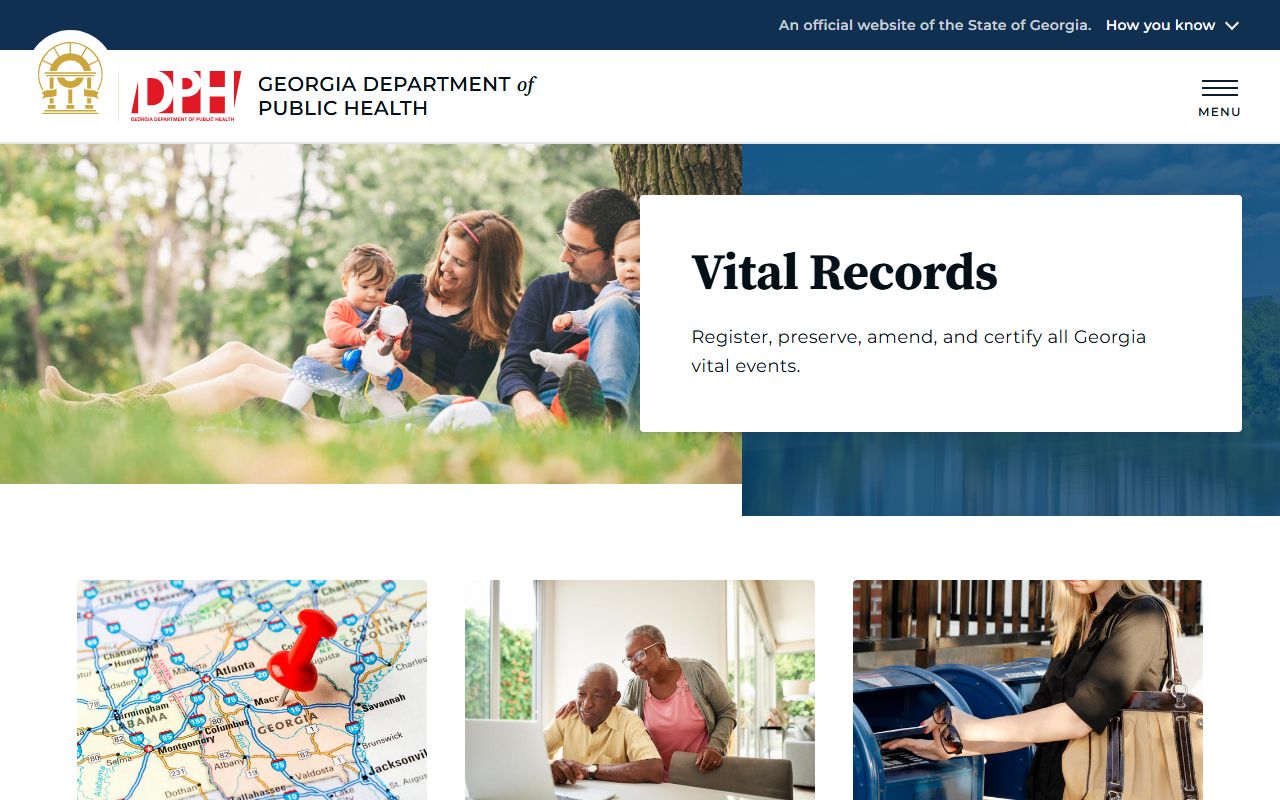
This screenshot shows the Georgia DPH Vital Records portal, which can be used to confirm older Albany area divorces before obtaining the full decree from the Dougherty County clerk.
Note: DPH records cover only 1952 through 1996. For divorces outside that window, go directly to the Dougherty County Superior Court clerk.
Open Records Access in Albany
Divorce decrees in Georgia are public records. Under the Georgia Open Records Act, OCGA 50-18-70, court records are generally open to any member of the public. You don't need to be a party to the case to request a copy. You don't need a lawyer. Anyone can walk into the Dougherty County Superior Court clerk's office and ask to search the index or get a copy of a decree.
There are some exceptions. Certain records tied to cases involving minors may be partially sealed. Cases where a judge specifically ordered sealing are another exception. But the vast majority of Albany divorce decrees are fully accessible to the public. If you run into a case that appears sealed or restricted, the clerk can tell you what information is available and what is not.
One thing to keep in mind: the names, terms, and case details in a divorce decree are public. If a case involved sensitive financial or personal information, some parties choose to file certain exhibits under seal at the time of the case. The main decree document itself typically remains open. When in doubt, ask the clerk what portions of the file are accessible.
Legal Help for Albany Divorce Cases
Not everyone can afford a private attorney, and Albany has resources that can help. The Georgia Legal Services Program provides free civil legal help to low-income Georgians, including assistance with divorce cases. Their website is glsp.org, and they serve southwest Georgia, which includes the Albany area.
Georgia Legal Aid also provides online self-help guides and tools at georgialegalaid.org. The site covers the divorce process step by step, explains what forms you need, and walks you through what to expect in court. It's a good starting point if you're handling a case on your own and want to understand the process before you file.
The State Bar of Georgia maintains a directory of licensed attorneys and a lawyer referral service. You can access those resources at gabar.org. If you're not sure whether you need legal representation, a brief consultation with an attorney can help you figure out how complicated your case is likely to be.
Note: Free legal aid programs have income limits and may have waitlists, so contact them as early in the process as possible.