
Valdosta Divorce Decree Lookup
Valdosta divorce decree records are stored with the Lowndes County Superior Court, the court responsible for all divorce cases filed by Valdosta residents and anyone else in Lowndes County. If you need to find a case, request a copy of a decree, or understand your options for obtaining divorce records in Valdosta, this page covers the clerk's office details, what the records contain, the Georgia laws involved, and where to find free legal help.
Valdosta Divorce Decree Quick Facts
Lowndes County Superior Court: Valdosta Divorce Records
All divorce decrees for Valdosta residents are filed with the Lowndes County Superior Court. The clerk's office is located at 327 N. Ashley Street, Valdosta, GA 31601. Phone: (229) 671-2400. The county website is lowndescounty.com. The courthouse is right in Valdosta, which means residents don't have to travel to a separate county seat for in-person record requests.
To request a copy of a divorce decree, you'll need to provide the names of both parties and, ideally, the year the case was filed or the case number if you have it. The clerk's office can search the court index by name if you don't have the case number. Walk-in visits are accepted during business hours. For mail requests, contact the office to confirm current fees, the required information, and how to send payment before you mail anything.
Certified copies carry the official court seal and are the format required by most agencies, courts, and financial institutions. Uncertified copies are fine for personal records but typically won't be accepted as proof of a decree's terms by anyone outside your household. The clerk is the only office in Lowndes County that can issue certified copies of Superior Court divorce decrees.
The Lowndes County website provides access to Superior Court contact information and resources for Valdosta divorce decree record requests.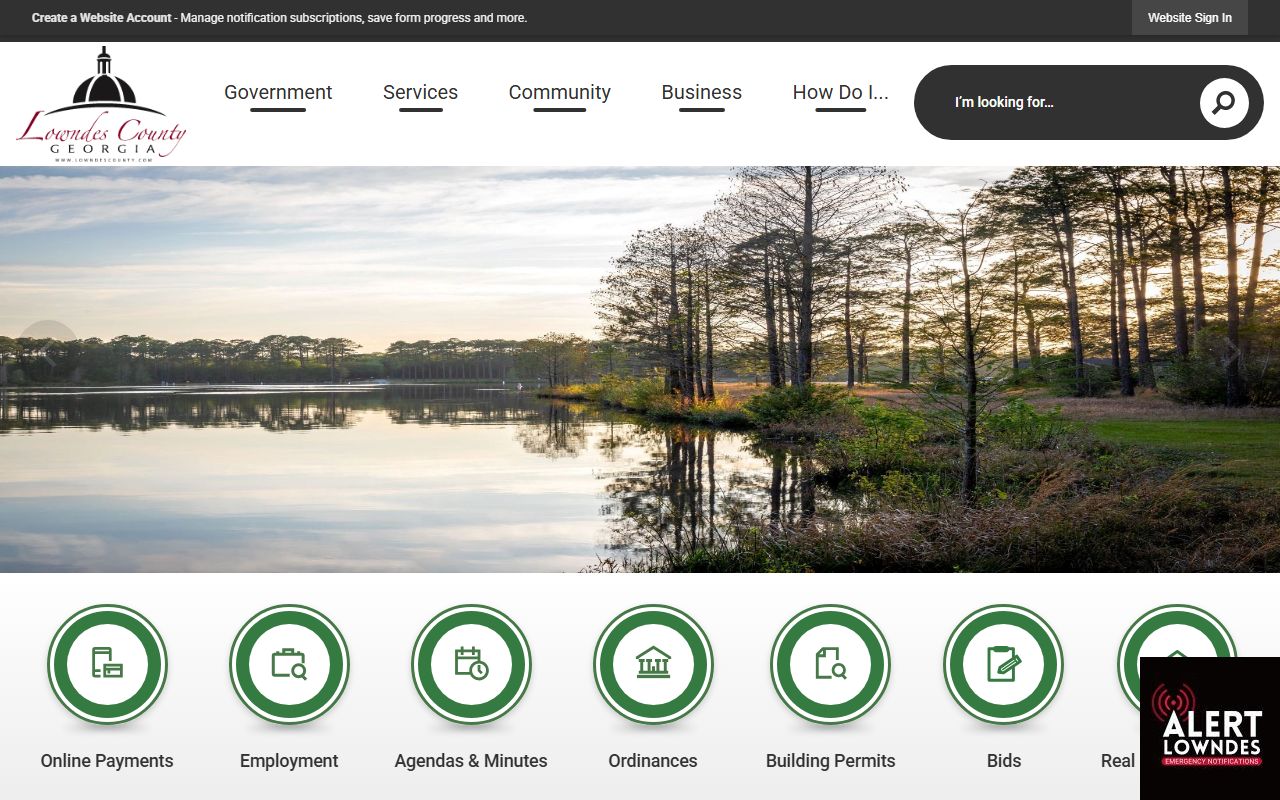
This screenshot shows the Lowndes County website, the starting point for Valdosta residents who need to contact the Superior Court clerk about divorce decree records.
What Valdosta Divorce Decrees Contain
A divorce decree is the full, final court order that legally ends a marriage. It's not a brief summary or a certificate. The decree is the actual document signed by the judge, and it contains every term the court set for the case. Banks, government agencies, and other courts ask for certified copies of the decree because those terms have legal force even after the case is closed.
A typical Valdosta divorce decree includes both parties' names, the date the divorce was granted, the grounds for the divorce, how property and debts were divided, any spousal support terms, and all custody, visitation, and child support arrangements if children were involved. If the court granted a name change, that appears in the decree as well. Each of these terms is binding and can be enforced through the court if a party fails to comply.
Post-decree modifications are separate. If any term was changed after the original judgment, those modification orders are filed as additional documents in the same case file. They don't erase the original decree; they exist alongside it and update specific provisions. If you need to know the current state of a custody or support arrangement, ask the clerk whether any modifications are on file for that case.
Georgia Divorce Law and Valdosta Cases
Valdosta divorces are governed by the same Georgia statutes that apply across the state. Under OCGA 19-5-1, only Superior Courts have jurisdiction to grant divorces in Georgia. Every Valdosta divorce, whether simple or contested, goes through Lowndes County Superior Court. No other court has this authority.
The residency requirement is firm. At least one spouse must have been a resident of Georgia for six continuous months before the divorce petition can be filed, under OCGA 19-5-2. This isn't just a recommendation; it's a jurisdictional requirement. Once the residency threshold is met and the petition is filed and served, a 30-day waiting period starts before the court can enter the final decree.
Georgia law lists 13 grounds for divorce under OCGA 19-5-3. Most Valdosta divorce cases use the no-fault ground, which states that the marriage is "irretrievably broken." The other 12 grounds exist, but they're used in a minority of cases and usually require additional evidence. The divorce petition must be a written document verified by the petitioner, as required by OCGA 19-5-5.
The Georgia OCGA 19-5-3 page lists the 13 grounds for divorce that apply in Valdosta and all other Georgia jurisdictions.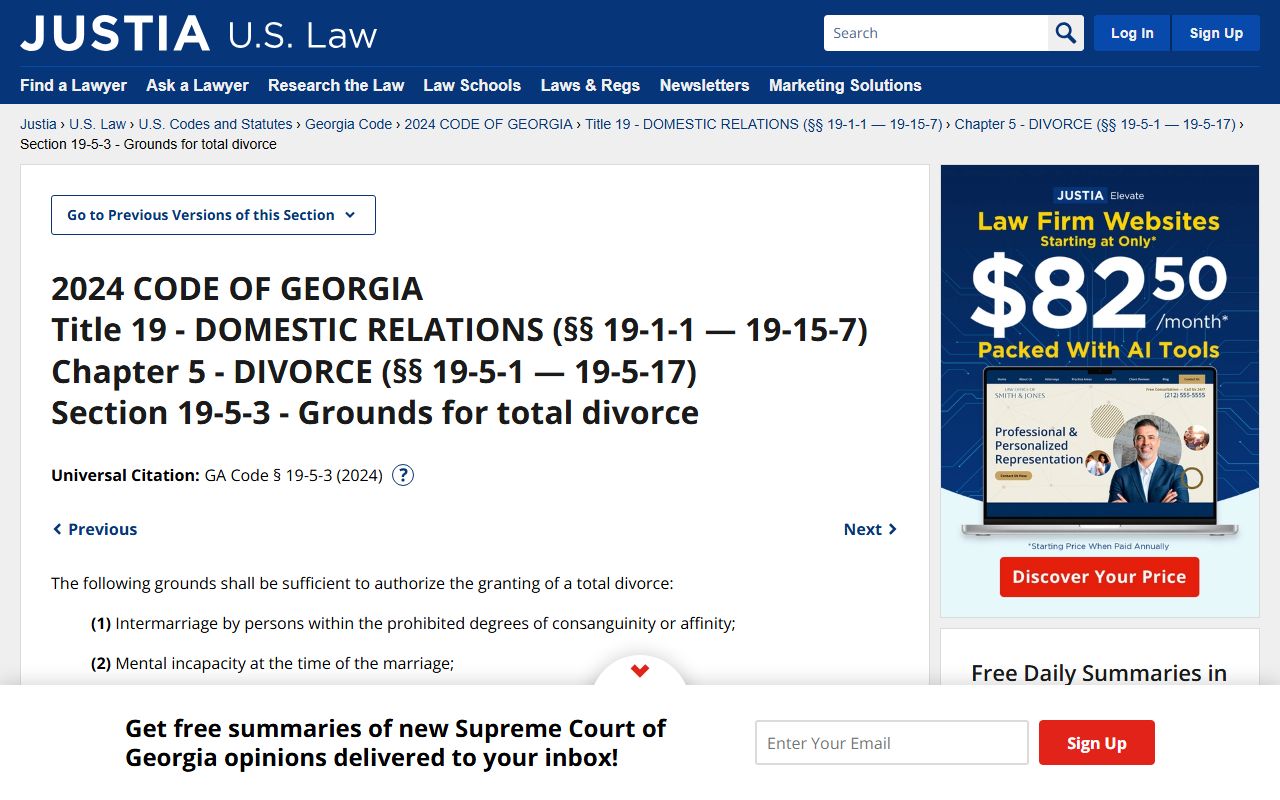
This screenshot shows the Georgia divorce statutes page, which outlines the grounds for divorce and other legal requirements that apply to Valdosta and Lowndes County divorce cases.
Open Records and Public Access in Valdosta
Divorce decrees filed with the Lowndes County Superior Court are public records. Georgia's Open Records Act, codified at OCGA 50-18-70, gives any member of the public the right to request court records. You don't need to be a party to the case, you don't need a specific reason, and you don't need legal representation to make a request.
The exceptions are limited. If a judge specifically ordered a case sealed, or if certain exhibits were filed under a protective order, those portions are not available. Some records involving minors may also be restricted. But the vast majority of Valdosta divorce decrees in the Lowndes County clerk's files are fully accessible to the public. If you come across a restricted record, ask the clerk what information from that file is open for review.
The clerk's index can be searched by the names of the parties to the divorce. You don't need to know the exact case number to start your search, though having it speeds things up considerably. Walk-in searches are permitted at the clerk's office during regular business hours.
Georgia DPH: Older Valdosta Divorce Verifications
For divorces granted between 1952 and 1996, the Georgia Department of Public Health maintains a statewide divorce index. If you need to verify that a Valdosta area divorce happened but don't have the county or case details, DPH can confirm whether the record is in the index. The DPH Vital Records office is at 1680 Phoenix Boulevard, Suite 100, Atlanta, GA 30349. Phone: (404) 657-2700. Website: dph.georgia.gov/VitalRecords.
Keep in mind that DPH only confirms the divorce occurred and can tell you the county. They don't issue copies of the actual decree. As the department explains: "Although the department can confirm divorces, copies of the records are held by the Clerk of the Superior Court in the county where the divorce was granted." That county, for Valdosta cases, is Lowndes.
Note: The DPH index covers only 1952 to 1996. Cases outside that range require a direct contact with the Lowndes County Superior Court clerk.
Legal Help for Valdosta Divorce Cases
The Georgia Legal Services Program offers free civil legal assistance to low-income Georgians, and they serve the Valdosta area. Their website is glsp.org. Eligibility is income-based, and their services cover family law matters including divorce. Contacting them early is worth doing, since waitlists can be a factor depending on current demand.
Georgia Legal Aid at georgialegalaid.org has detailed online guides covering the divorce process in Georgia. These guides are written in plain language, explain what forms to use, describe how to file at the courthouse, and lay out what to expect at each stage. If you're planning to handle a Valdosta divorce case on your own, this site is a practical starting point.
The State Bar of Georgia has a lawyer referral service at gabar.org where you can find family law attorneys licensed in Georgia. For contested cases, cases with significant property or debt, or cases involving children, professional legal help is worth the cost. A short consultation can help you understand whether your case is one you can handle alone or whether it needs an attorney.