
Access Chattooga County Divorce Decrees
Chattooga County divorce decree records are kept by the Clerk of Superior Court in Summerville, Georgia. The clerk is the official holder of all divorce filings in the county, and these records are available to the public under the Georgia Open Records Act. This page walks you through how to request divorce decrees in Chattooga County, what case files contain, what it costs, how Georgia divorce law applies, and where local residents can find legal help.
Chattooga County Divorce Decree Quick Facts
How to Get Chattooga County Divorce Records
The Chattooga County Clerk of Superior Court is at 10035 Commerce Street, Summerville, GA 30747. Reach the office by phone at (706) 857-0704. The Chattooga County government website has contact details for the court. Visiting in person at the Summerville courthouse is the most direct way to request a divorce decree. Staff can usually pull a case while you wait if you have the right information.
Bring the full legal names of both spouses and the approximate filing year when you visit. A case number helps narrow the search if you have one. Staff will search the record index by name and year. Bring valid photo ID. For mail requests, write to the clerk's office with clear case details and a self-addressed stamped envelope. Call ahead to confirm accepted payment methods and current fees before sending anything by mail. Response times for mail requests can vary.
Note: Call the clerk's office in Summerville before traveling, especially if you are searching for an older case that may be stored in archives rather than an active file system.
What Chattooga County Divorce Decrees Contain
A divorce decree from the Chattooga County Superior Court is the court's final order ending a marriage. It is legally binding on both parties. The decree covers how property is divided, whether alimony is ordered and for how long, and any custody and visitation arrangement for children. Its terms can be enforced back in court if either party fails to comply.
The full case file at the Chattooga County clerk includes the original divorce petition, proof that the respondent was served, financial disclosures, any temporary orders made during the case, and the final agreed order or decree for uncontested divorces. Contested cases will also have motion filings and the court's written decisions. This is entirely different from the short certificate the Georgia Department of Public Health issues. The DPH certificate only confirms a divorce occurred in Georgia between 1952 and 1996. It has no case terms, no property details, no custody information. If you need the actual decree or if the case is outside the 1952-1996 window, the Chattooga County clerk is the place to go. Contact DPH at 1680 Phoenix Blvd, Suite 100, Atlanta, GA 30349, (404) 657-2700, or at dph.georgia.gov/VitalRecords.
Chattooga County Divorce Decree Fees
The Chattooga County Clerk of Superior Court charges copy fees consistent with Georgia's standard court rate structure. Plain copies are typically $0.50 to $1.00 per page. Certified copies carry the clerk's official seal and cost more. Certified copies are what you need for legal purposes such as filing with another court, applying for a name change, or providing proof of marital status. Ask staff about current rates when you call or arrive at the courthouse.
If all you need is to verify that a divorce occurred in Georgia between 1952 and 1996, the state DPH can help at lower cost than pulling a full case file. For anything beyond that, the county clerk is your source. Their Vital Records page outlines the verification request process and what information you will need to provide.
Georgia Divorce Law in Chattooga County
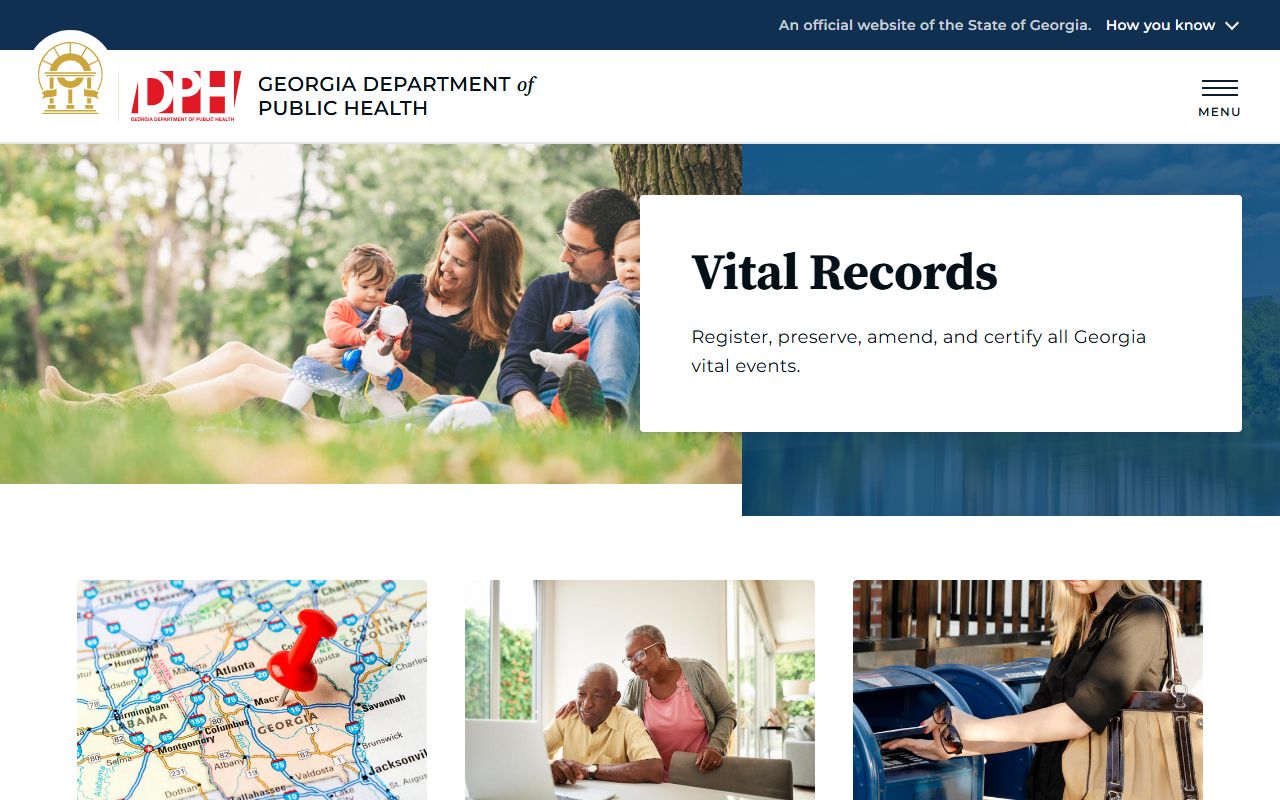
The Georgia DPH Vital Records database, accessed at dph.georgia.gov, provides statewide divorce verification for the 1952 to 1996 period. The image below shows that resource as it appears to the public.
Georgia law applies to every divorce filed in Chattooga County. The Superior Court holds jurisdiction under OCGA 19-5-1. At least one spouse must meet the six-month residency requirement under OCGA 19-5-2. Filing takes place in the county of residence of either spouse, and Summerville is the seat of the Chattooga County Superior Court.
Georgia recognizes 13 grounds for divorce under OCGA 19-5-3. The no-fault ground, that the marriage is irretrievably broken, is the most common across all Georgia counties including Chattooga. After the respondent is served, a 30-day waiting period must pass before the judge can sign the final decree. No exceptions apply even in agreed, uncontested cases. Free forms for self-represented filers are at the Georgia Courts self-help portal.
Public Access to Chattooga County Divorce Records
The Georgia Open Records Act covers divorce decree records in Chattooga County. Anyone can request records from the clerk's office. You do not need a court order, a lawyer, or any stated reason to access public court records. The clerk is legally required to respond to requests and provide copies for the standard fee.
Limited exceptions exist. Records can be sealed when disclosure would harm minor children or when both parties ask the court to seal and the court agrees. Sealed records are not accessible without a court order. This happens rarely in routine Chattooga County divorce cases. Most divorce decrees are public and available through a standard request. For older cases stored in archives, allow extra time for the clerk to locate and pull the file.
Note: If a name search produces multiple results for common surnames, bring additional details such as approximate date of birth or a former address to help staff identify the right case.
Legal Help for Chattooga County Divorce
Georgia Legal Services Program serves Chattooga County and surrounding northwest Georgia counties. They provide free civil legal help to qualifying low-income residents in family law matters including divorce and custody. Apply online or by phone. Income eligibility standards apply based on household size and income level.
Georgia Legal Aid has free online guides and forms for people filing divorce in Georgia without an attorney. Uncontested cases where both parties agree on all terms can often be handled with these self-help tools. For cases involving disputes over property, children, or support, getting legal advice from a licensed attorney is a good idea. The State Bar of Georgia's lawyer referral service can help you find a family law attorney in your area. The Georgia Courts website also provides contact details for the Chattooga County Superior Court.