
Find Divorce Decree Records in Marietta
Marietta divorce decree records are filed with the Cobb County Superior Court, and the courthouse sits directly in Marietta, which makes in-person access more convenient than in many Georgia cities. Whether you need to obtain a certified copy, verify a case, or just find out what's in the public record, this page walks through the process for Marietta residents and anyone else looking into Cobb County divorce cases.
Marietta Divorce Decree Quick Facts
Cobb County Superior Court: Marietta Divorce Decree Access
The Cobb County Superior Court Clerk handles all divorce records for Marietta and the rest of Cobb County. Because the courthouse is located right in Marietta at 70 Haynes Street, Marietta, GA 30090, local residents don't have to travel to a separate county seat. That's a convenience worth noting, since in many Georgia jurisdictions the courthouse and the city are miles apart.
The clerk's office phone number is (770) 528-1300. Their website is cobbsuperiorcourtclerk.com. You can search for divorce cases, request certified copies, and find guidance on what to submit with a mail request. Staff can walk you through the index if you know the general time frame but don't have a case number. Bring a photo ID for in-person visits.
Cobb County processes a significant number of cases given the size of the metro area it serves. If you're searching for older records, the clerk's staff can help you determine whether the file is stored on-site or has been archived. Archived records may take a bit more time to pull, so plan accordingly if you need something from many years back.
The Cobb County Superior Court Clerk website is the main hub for Marietta divorce decree requests, online search tools, and clerk contact information.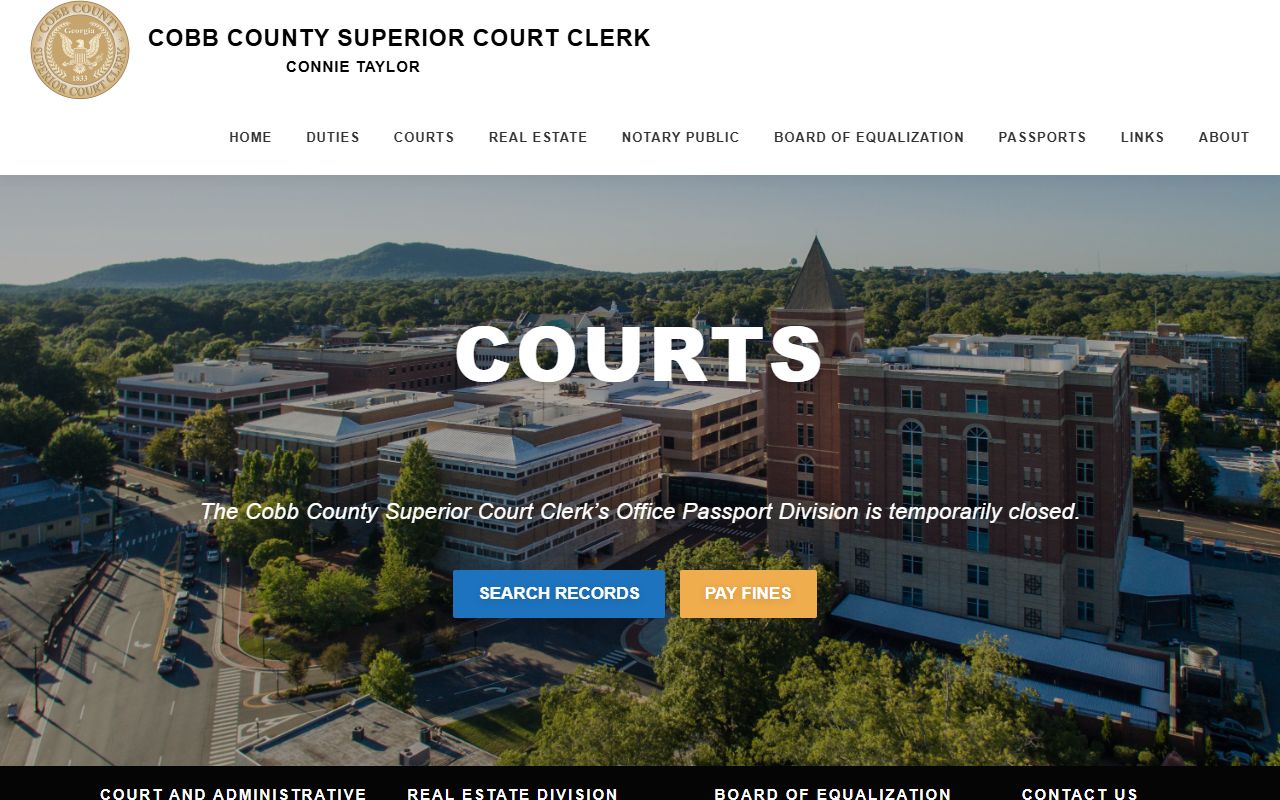
This screenshot shows the Cobb County Superior Court Clerk's website, which serves as the primary resource for Marietta residents searching for divorce decree records.
What a Marietta Divorce Decree Includes
A divorce decree is the final order signed by the judge at the end of a divorce case. It's the document that officially ends the marriage and sets out all the terms the court ordered. That's different from a short divorce certificate, which just confirms the divorce happened without spelling out any details.
A Marietta divorce decree will typically list the names of both parties, the case number, the date the decree was entered, the grounds for the divorce, and all terms relating to property division, debt allocation, alimony, child custody, visitation schedules, and child support. If a name change was approved as part of the case, it appears in the decree. The decree is what you need if you want to enforce any of those terms later.
If the case had post-decree modifications, those are filed as separate orders. Custody changes, support modifications, and other changes after the original decree are all in the file but listed as separate documents. Always check whether a modification exists before assuming the original decree is the final word on any given term.
Note: The clerk issues certified copies with an official seal. Uncertified copies are fine for personal use but most agencies will not accept them as proof of the decree's terms.
Georgia Divorce Law Applied to Marietta Cases
Georgia law is clear about which court can handle a divorce. Under OCGA 19-5-1, only Superior Courts have jurisdiction over divorce and alimony matters. That means every Marietta divorce, no matter how simple or contested, goes through Cobb County Superior Court. No other court level in Georgia has this power.
Residency is also a firm requirement. At least one spouse must have lived in Georgia for six consecutive months before filing. That's the rule under OCGA 19-5-2. Meeting that requirement is a prerequisite for the court to take jurisdiction over the case. Short stays or recent moves to Marietta won't satisfy it if the total time in Georgia doesn't add up to six months.
Once the other party is served with the divorce petition, Georgia law requires a 30-day waiting period before the court can enter a final decree. This waiting period exists whether the case is uncontested or not. After those 30 days, if everything is in order, the judge can sign the final decree. Georgia recognizes 13 grounds for divorce under OCGA 19-5-3, but most Marietta cases are filed on the no-fault "irretrievably broken" ground.
The petition itself must be a written, verified document as required by OCGA 19-5-5. Self-represented filers can access approved forms through the Georgia Courts self-help portal at georgiacourts.gov/a2j/self-help-resources/family-law/divorce-forms/.
Georgia Courts and Marietta Divorce Resources
The Georgia Courts website at georgiacourts.gov provides statewide information on the court system, self-help tools, and links to court-specific resources. For Marietta residents who are working through a case on their own, the site's family law section is a good first stop. It links to approved divorce forms, explains the basic steps of the process, and gives an overview of what to expect at each stage.
Court forms for a self-represented divorce case are available at no cost. Using the official forms helps make sure you're submitting documents in the format the Cobb County court accepts. The clerk's office will not prepare forms for you, but they can confirm whether a document you've prepared looks complete.
The Georgia Courts main website provides statewide resources for divorce cases including self-help tools and links to county-specific court information.
This screenshot shows the Georgia Courts website, which offers forms, guides, and links to Superior Court resources relevant to Marietta and Cobb County divorce cases.
Public Record Access and Open Records in Marietta
Divorce decrees filed with the Cobb County Superior Court are public records. Georgia's Open Records Act, codified at OCGA 50-18-70, makes court records accessible to any member of the public. You don't need to be a party to a case to request a copy of a decree. Any person can walk into the clerk's office and ask to view the index or obtain a copy.
Exceptions exist, but they're not common. A judge can order certain records sealed in cases involving particularly sensitive matters. Some exhibits or financial documents filed under seal remain restricted. But the decree itself is almost always accessible. If you find that a record appears restricted, the clerk can tell you what portion of the file is available and what is not.
There's no requirement to state your reason for wanting the record. You show up, ask for the case, pay the applicable copy fee, and you're done. This applies equally whether you're the party to the case, a family member, a researcher, or anyone else with a reason to look.
Legal Help for Marietta Divorce Cases
If you can't afford a private attorney, there are options in the Marietta area. The Georgia Legal Services Program serves low-income Georgians across the state and can help with civil matters including divorce. Their website is glsp.org. Eligibility is based on income, and their coverage area includes Cobb County.
Georgia Legal Aid at georgialegalaid.org is another solid resource. The site has plain-language guides on filing for divorce in Georgia, what to expect at each step, and how to handle common issues that come up in family cases. It's especially useful if you're considering self-representation and want to understand the process before you start.
The State Bar of Georgia runs a lawyer referral service and a find-a-lawyer directory at gabar.org. If you're unsure whether your case needs legal help, a consultation with a Marietta area family law attorney can help you assess the complexity and decide how to proceed.