
Gainesville Divorce Decree Records
Gainesville divorce decree records are held by the Hall County Superior Court, which serves Gainesville and the rest of Hall County for all divorce filings. The courthouse is located directly in Gainesville, which makes in-person record requests convenient for local residents. This page covers where to find divorce decree records, what they contain, the Georgia laws that govern divorce cases, and what legal help is available in the area.
Gainesville Divorce Decree Quick Facts
Hall County Superior Court: Gainesville Divorce Records
Every divorce case filed by a Gainesville resident goes through the Hall County Superior Court. The Clerk of Superior Court is the office that stores all divorce decrees, issues copies, and certifies records for official use. The clerk's office is at 225 Green Street SE, Gainesville, GA 30501. Phone: (770) 531-7025. The county website is hallcounty.org.
Because the Hall County courthouse is located right in Gainesville, residents don't have to travel to a separate county seat. Walk-in visits are welcome during regular business hours. When you go, bring a photo ID and as much case information as you have: both parties' names, the approximate year of the divorce, and the case number if you have it. The clerk's office can search the index by party name if you don't have the case number.
Mail requests are another option for obtaining copies. Contact the clerk's office before mailing anything to confirm the current fee schedule, what information to include, and how to submit payment. Certified copies carry an official court seal and are required by most agencies and courts that need to verify decree terms. Uncertified copies are fine for personal reference but won't be accepted as legal proof of the decree's provisions.
The Hall County official website provides contact details and resources for the Superior Court clerk's office, where Gainesville divorce decree records are maintained.
This screenshot shows the Hall County website, the starting point for Gainesville residents who need to contact the Superior Court clerk about divorce decree records and certified copies.
What a Gainesville Divorce Decree Contains
It's worth being clear about the difference between a divorce certificate and a divorce decree. A certificate is a short document that confirms the divorce happened. A decree is the full final court order. The decree contains all the actual terms the judge ordered, and those terms carry legal weight. That's what courts, banks, and agencies want to see when they need proof of what a divorce required.
A Gainesville divorce decree will typically include the names of both parties, the date the divorce was granted, the grounds cited in the petition, how property and debts were divided, any spousal support terms, and all custody and child support arrangements if children were part of the case. Name change orders appear here as well. Settlement agreements negotiated by the parties are usually incorporated into the decree as court orders, making them binding and enforceable.
If anything was modified after the original decree, those modification orders are filed separately with the clerk but exist in the same case file. They update the original rather than replace it. If you need to know the current status of a custody schedule or support amount, confirm whether modifications exist before assuming the original decree is the last word.
Note: Only the Hall County Superior Court clerk can issue certified copies of Hall County divorce decrees. No other office has this authority.
Georgia Divorce Law and Gainesville Cases
Georgia gives Superior Courts exclusive power over divorce cases. Under OCGA 19-5-1, no other court level in the state can grant a divorce. That means every Gainesville divorce goes through the Hall County Superior Court, whether the case is a simple uncontested filing or a complex contested matter.
Residency is a firm requirement before filing. At least one spouse must have lived in Georgia for six continuous months, under OCGA 19-5-2. Once the petition is filed and served, a 30-day waiting period starts before the judge can enter the final decree. This period applies to all Georgia divorces. There is no shortcut, even when both spouses fully agree on every term from the start.
Georgia recognizes 13 grounds for divorce under OCGA 19-5-3. Most Gainesville cases use the no-fault ground that the marriage is "irretrievably broken." The fault-based grounds exist but are less commonly cited in modern filings. All divorce petitions must be submitted as written, verified documents as required by OCGA 19-5-5.
Self-represented filers can get approved Georgia divorce forms for free at georgiacourts.gov/a2j/self-help-resources/family-law/divorce-forms/. Using the official forms ensures the clerk will accept your filing.
Georgia DPH and Gainesville Divorce Verification
The Georgia Department of Public Health keeps a statewide divorce index for cases granted between 1952 and 1996. If you need to confirm a divorce happened but don't know exactly which county handled the case, DPH can help narrow it down. The office is at 1680 Phoenix Boulevard, Suite 100, Atlanta, GA 30349. Phone: (404) 657-2700. Online: dph.georgia.gov/VitalRecords.
What DPH can do is confirm a divorce is in their index. What they can't do is give you the full decree. The department is explicit about this: "Although the department can confirm divorces, copies of the records are held by the Clerk of the Superior Court in the county where the divorce was granted." So if the divorce is confirmed as a Hall County case, the next step is the Gainesville courthouse.
The Georgia DPH vital records request page explains the process for submitting a verification request for older Gainesville area divorce cases.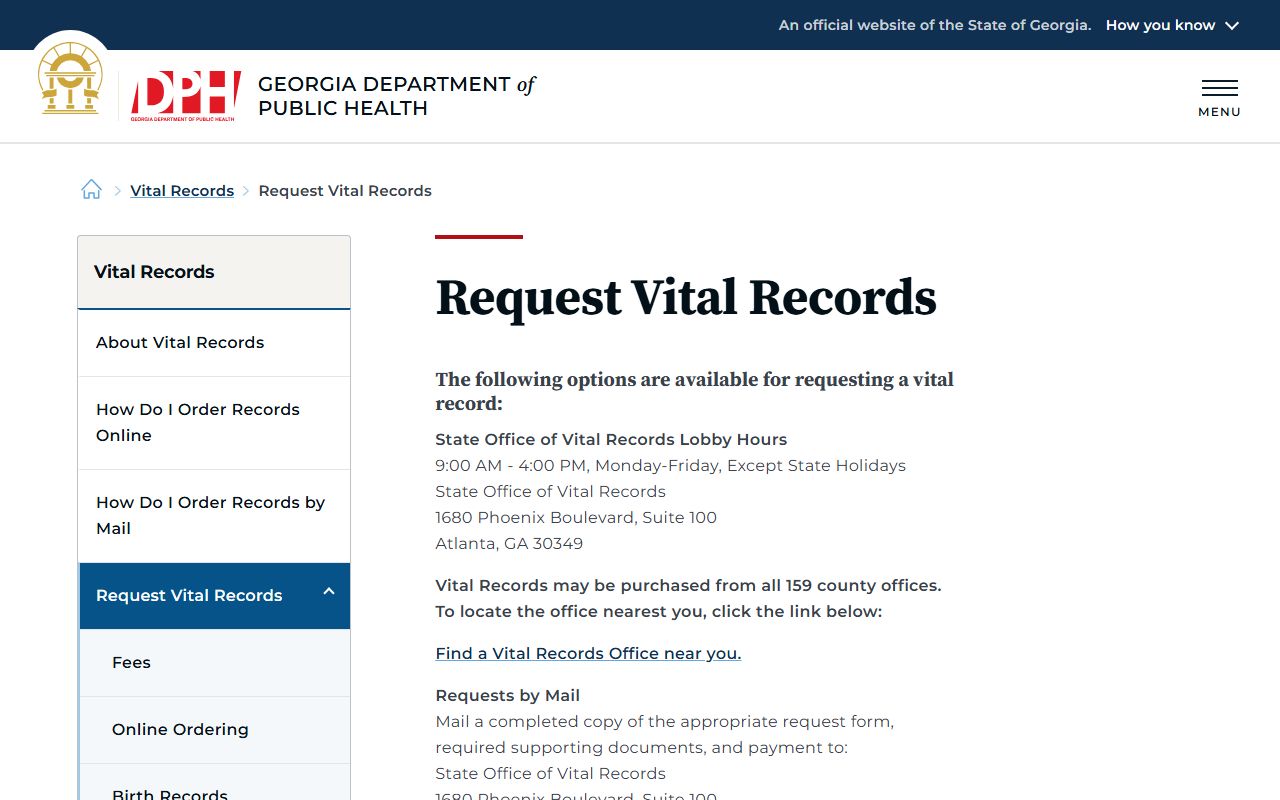
This screenshot shows the DPH Vital Records request page, which Gainesville residents can use to verify older divorces and determine which county holds the decree.
Open Records Access in Gainesville
Georgia's Open Records Act at OCGA 50-18-70 makes divorce decrees in Hall County public records. Anyone can request access. You don't need to be a party to the case, you don't need to state a reason, and you don't need legal representation to ask the clerk for a copy of a decree.
The narrow exceptions are cases where a judge ordered sealing, or where particular exhibits were filed under protective order. Some materials in cases involving minor children may also have restrictions. But the decree itself in a standard divorce case is fully open to the public. If you run into a restricted file, ask the clerk what portions are available.
Walk-in searches at the Hall County courthouse allow anyone to look up cases in the public index. Searches are typically by party name. The clerk's staff can help you understand how the index works and what information you need to find the right record.
Legal Help for Gainesville Divorce Cases
The Georgia Legal Services Program provides free civil legal help to low-income Georgians, including residents in Hall County. Family law matters, including divorce cases, are within their scope of services. Their website is glsp.org. They're a good first call if you're not sure whether you qualify for free help or what your options are.
Georgia Legal Aid at georgialegalaid.org has step-by-step guides on Georgia divorce procedure written in plain English. The guides cover filing the petition, serving the other party, what happens at a hearing, and how to handle post-decree issues. These resources are free and available to anyone, not just those who qualify for legal aid income-wise.
If you need to find a private attorney in the Gainesville area, the State Bar of Georgia at gabar.org runs a lawyer referral service and a searchable directory. For Gainesville divorce cases involving contested property, business assets, or custody disputes, professional legal advice is often worth the investment.