
Dalton Divorce Decree Search
Dalton divorce decree records are held by the Whitfield County Superior Court, which is located in Dalton at 205 N. Selvidge Street, making it convenient for local residents to request records in person. If you need to find a divorce decree tied to a Dalton case, get a certified copy, or understand how divorce records work in Whitfield County, this guide walks you through the process, the relevant Georgia statutes, and the resources available in the area.
Dalton Divorce Decree Quick Facts
Whitfield County Superior Court in Dalton
The Whitfield County Superior Court Clerk handles all divorce filings and records for Dalton and the surrounding county. The courthouse is at 205 N. Selvidge Street, Dalton, GA 30720. You can call the clerk's office at (706) 278-1363, and county information is available at whitfieldcountyga.gov.
Dalton is both the county seat of Whitfield County and the primary city in northwest Georgia's carpet manufacturing corridor. The courthouse is centrally located in the city, making in-person records requests straightforward. Bring both parties' full legal names and, if possible, the year the divorce was finalized or the case number. Certified copies are the standard request when you need the record for legal or official use. Plain copies cost less but do not carry the court seal.
Dalton has a substantial Spanish-speaking population, and some residents may find it helpful to ask the clerk's office whether bilingual assistance is available. For formal legal matters, having a translator or bilingual attorney present can make a significant difference. Note: The Whitfield County clerk can tell you about current fees and turn-around times for records requests before you make the trip.
The Georgia DPH Vital Records page, shown below, is a useful starting point for verifying older Whitfield County divorce cases from the 1952-1996 statewide index. Visit dph.georgia.gov/VitalRecords to learn how to submit a verification request for a Dalton-area divorce.
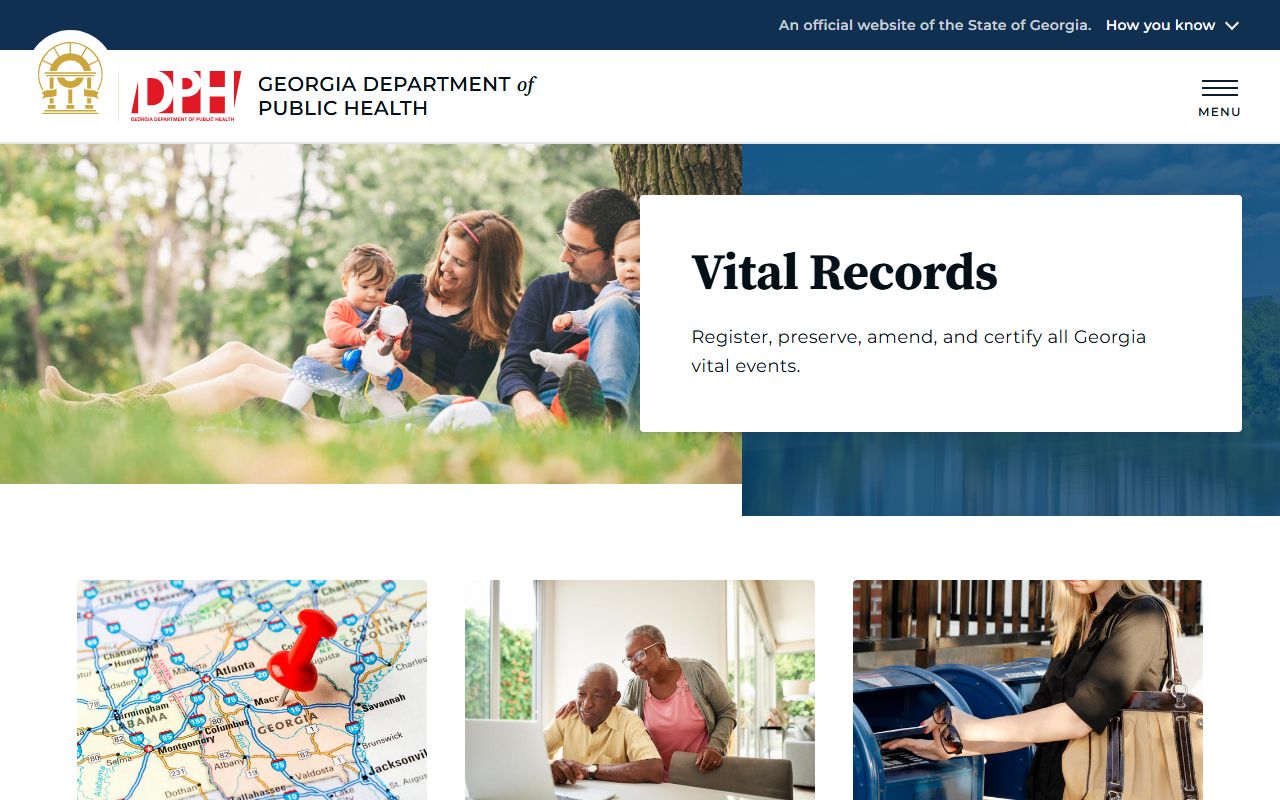
The screenshot shows the Georgia DPH Vital Records website, which provides access to the statewide divorce index and information about how to verify divorces for cases in Dalton and Whitfield County from 1952 to 1996.
What a Dalton Divorce Decree Contains
A divorce decree is the final court order that ends a marriage. It is signed by a Superior Court judge and filed with the Whitfield County clerk. The decree names both parties, records the date the court granted the divorce, and states the court's decisions on all issues in the case.
When children were part of the case, the decree will establish custody, the parenting schedule, and child support. When there was shared property, the decree will say who gets what: the house, vehicles, bank and retirement accounts, and debts. If alimony was ordered, the amount, schedule, and duration appear in the decree. All of these are binding court orders once the judge signs the document.
The case file behind the decree holds the full record of the case: the petition, financial disclosures, any settlement agreement, motions, responses, and every order the court issued. If you need a specific document from the file rather than just the final decree, ask the clerk what is available. The cost depends on the number of pages and whether you need certified or plain copies. For most purposes, the final decree is the key document, but a full case file can be useful when reviewing property or custody arrangements in detail.
Georgia Divorce Law in Whitfield County
Georgia divorce cases are governed by Title 19, Chapter 5 of the state code. Under OCGA 19-5-1, the Superior Court has exclusive jurisdiction over divorce in Georgia. Every Dalton divorce case goes to the Whitfield County Superior Court, regardless of how straightforward or complicated the situation is.
At least one spouse must have lived in Georgia for six months before filing, per OCGA 19-5-2. If you recently moved to Dalton from another state, you may need to wait before filing here. Once the residency requirement is met, the case is filed in the county where at least one party lives, which for Dalton residents means Whitfield County.
Georgia lists 13 grounds for divorce under OCGA 19-5-3. The no-fault "irretrievably broken" ground is used in most cases. It requires no evidence of fault on either side. After service of divorce papers on the other party, a 30-day waiting period applies before the court can issue a final decree. The petition must be in writing and verified by the petitioner, as required by OCGA 19-5-5.
Georgia's OCGA divorce statute, shown below, includes the 13 grounds for divorce that apply in Dalton and throughout Whitfield County. Visit Justia's OCGA 19-5-3 page to read the full text of Georgia's divorce grounds.
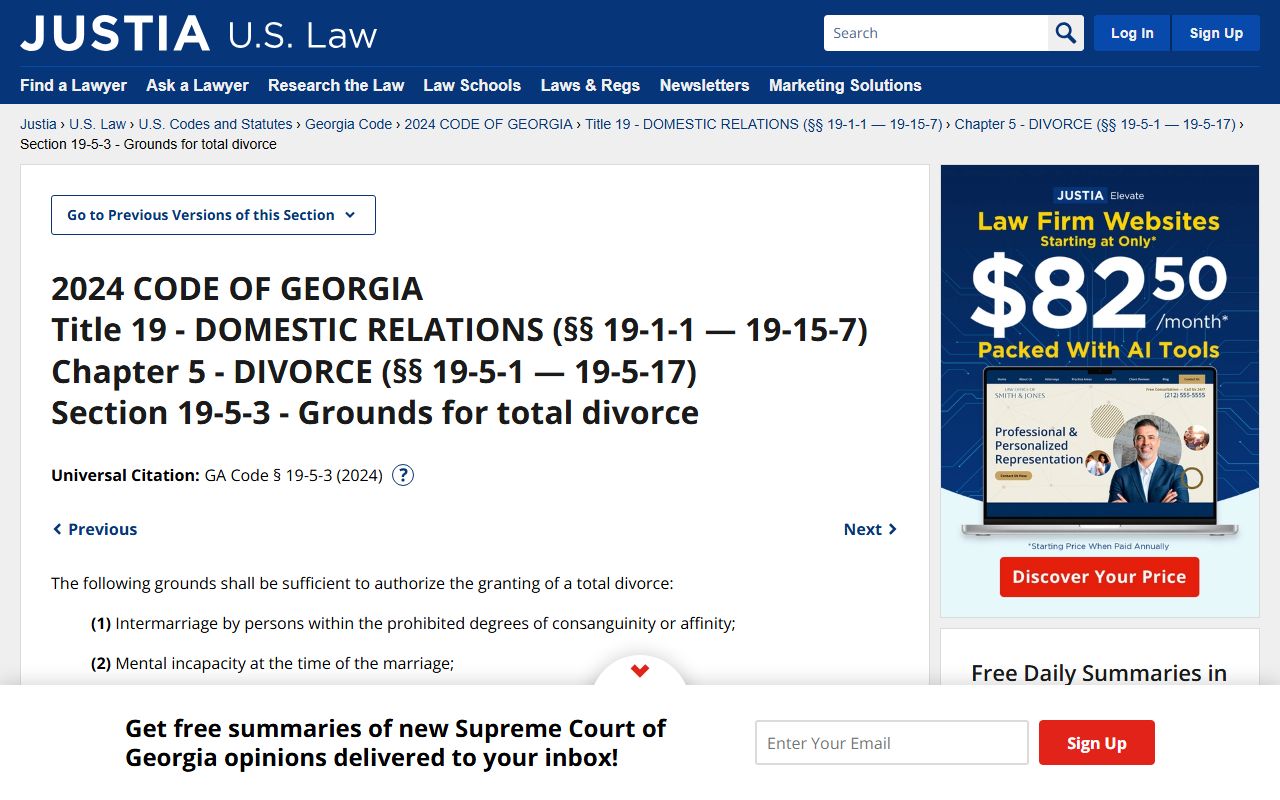
The screenshot shows the Justia page for OCGA 19-5-3, which lists all 13 grounds for divorce in Georgia, including the no-fault ground most commonly used in Dalton cases before the Whitfield County Superior Court.
State Records and Statewide Divorce Verification
The Georgia Department of Public Health keeps a statewide divorce index for cases from 1952 through 1996. If you need to verify a Dalton-area divorce from that period and are uncertain which county filed it, the DPH index can help. The DPH can confirm the county of filing but does not provide copies of actual decrees. The department itself notes that "copies of the records are held by the Clerk of the Superior Court in the county where the divorce was granted."
For Dalton cases in that range, once you confirm the county is Whitfield through the DPH, you then contact the clerk's office in Dalton for the actual certified copy. The DPH is at 1680 Phoenix Boulevard, Suite 100, Atlanta, GA 30349, phone (404) 657-2700. Their website is at dph.georgia.gov/VitalRecords.
Open Records and Public Access in Whitfield County
Divorce records in Whitfield County are public under the Georgia Open Records Act, OCGA 50-18-70. Any person can request them. You do not need to be a party to the case and do not need to explain why you want the record. The clerk's office handles public records requests during business hours.
Some records are sealed. A judge may order a file sealed when it contains sensitive information, especially about minor children or under a financial confidentiality order. Sealed files are not accessible to the public without a court order. For most Dalton divorce cases, the records are open. Ask the clerk whether a specific file is sealed before making a complete request to save time if the file turns out to be restricted.
Legal Help in Dalton and Whitfield County
Dalton and Whitfield County residents who need help with a divorce case or with getting records have access to free and low-cost legal resources. The Georgia Legal Services Program at glsp.org provides civil legal help to income-qualified residents, including family law cases in northwest Georgia. They can assist with filings, responses, and understanding what the law requires.
Georgia Legal Aid at georgialegalaid.org offers online self-help guides and referrals at no cost. For those who want to hire an attorney, the State Bar of Georgia at gabar.org has a directory of licensed family law attorneys searchable by county. Standardized Georgia divorce forms for self-represented filers are available at no cost at georgiacourts.gov. These are the court-approved forms used statewide.