
Taylor County Divorce Decree Search
Taylor County divorce decree records are held by the Clerk of Superior Court in Butler, Georgia. The clerk's office keeps certified copies of all final divorce orders, the complete case files for every divorce action in the county, and a full docket of proceedings. If you need to locate a Taylor County divorce decree, get a certified copy for a legal matter, or review the terms of a past court order, the Butler courthouse is where you start. This guide covers how records requests work, what the records contain, fees, and the Georgia laws that apply.
Taylor County Divorce Decree Quick Facts
How to Request Taylor County Divorce Records
The Taylor County Clerk of Superior Court is at 1 N. Broad Street, Butler, GA 31006. Call (478) 862-3544 to confirm office hours and what you need to have ready. The county website may have additional contact details. Taylor County is rural, so calling ahead before making the trip can save time. Going in person is the most direct route to getting your records; staff can search files and answer questions on the spot.
To find and copy a divorce decree, bring the full legal names of both spouses and the approximate year the divorce was finalized. A case number, if available, helps a lot. Any member of the public can request a copy under Georgia's open records rules. You do not need to be a party to the case. Bring a photo ID. Copy fees are collected at the time of your request. If you need a certified copy, let the clerk know upfront, as certified versions cost more than plain photocopies but carry legal weight that plain copies do not. For mail requests, write to the office and ask for the current fee schedule before sending payment.
What Taylor County Divorce Decrees Contain
A divorce decree from Taylor County Superior Court is a binding court order that ends a marriage and sets the terms both parties must follow going forward. It addresses property division, specifying which assets each spouse receives from the marital estate. Debts are also divided in the decree, assigning specific obligations to one party or the other. If alimony was part of the case, the decree states how much is owed and for how long. When minor children were involved, the decree contains the full custody arrangement, the visitation schedule, and the child support amount. Every provision in the decree is enforceable by the court. Failure to follow the terms can result in enforcement proceedings.
The full case file at the Taylor County courthouse contains more than just the final decree. You will find the original divorce petition, any response or counterclaim filed by the other spouse, financial affidavits, motions made during the case, any temporary orders entered before the final decree, and parenting plans if children were involved. This broader record is useful if you need to trace the history of a case, understand how particular terms were established, or verify what was agreed to at an earlier stage. Fees apply per page for copies of any documents in the file.
Note that a short divorce certificate from the Georgia Department of Public Health only confirms that a divorce occurred. It does not include the terms of the court order. If you need the actual terms, you need the decree from Taylor County Superior Court.
Georgia's divorce statute at OCGA 19-5-3 is available in full through the Justia legal database, which mirrors the official Georgia Code.
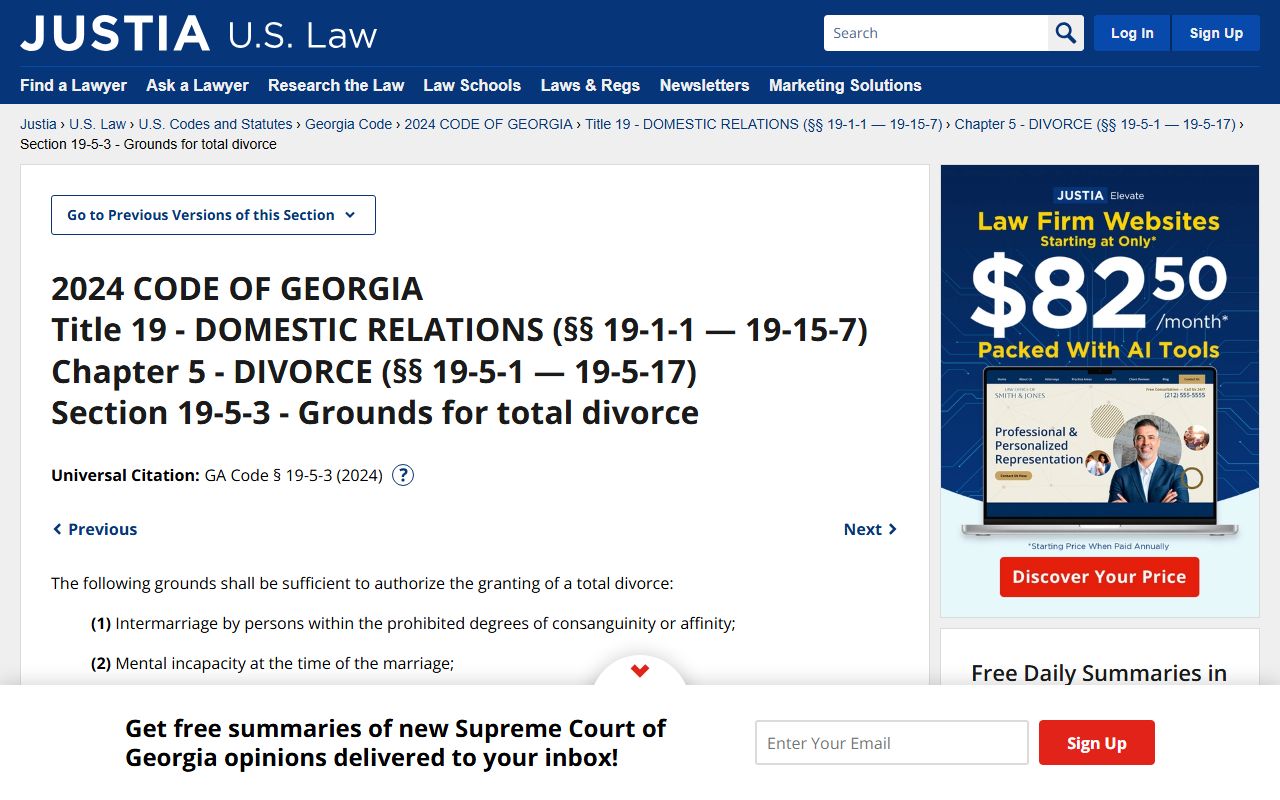
The statute lists all 13 grounds Georgia courts accept for divorce. The no-fault ground is the most commonly used in Taylor County and across the state.
Taylor County Divorce Decree Fees
Copy fees at the Taylor County Clerk of Superior Court are consistent with standard Georgia rates. Plain copies of documents in a case file generally run between $0.50 and $2.50 per page. Certified copies cost more because the clerk adds an official seal and signature. That certification is what makes the document usable in court proceedings, government submissions, and name change applications. Ask specifically for a certified copy if you plan to use the document for any official purpose.
For divorces recorded in Georgia between 1952 and 1996, the Georgia Department of Public Health can confirm whether a divorce was registered during those years. Their Vital Records office is at 1680 Phoenix Blvd, Suite 100, Atlanta, GA 30349. Call (404) 657-2700 or see the Vital Records page. DPH only confirms the fact of divorce; it does not provide the decree or its terms. For all other records and for the actual decree content, the Taylor County clerk is the only source.
Georgia Divorce Laws in Taylor County
Georgia law governs all divorces filed in the state, and the same rules apply in Taylor County as in every other Georgia county. The residency requirement in OCGA 19-5-2 mandates that at least one spouse have been a Georgia resident for six months before a petition can be filed. You file in the Superior Court of the county where either spouse currently lives. Where the marriage took place does not matter for filing purposes.
Georgia recognizes 13 grounds for divorce under OCGA 19-5-3. The no-fault ground, that the marriage is irretrievably broken, is by far the most commonly used in Taylor County and statewide. It requires no proof of wrongdoing by either party. Other grounds such as adultery, willful desertion, habitual intoxication, and cruel treatment exist for contested cases where one party alleges specific misconduct, but these grounds require proof and tend to make proceedings more complex.
Once the petition is filed and the respondent is served, Georgia law imposes a 30-day waiting period before a final decree can be entered. This applies in all cases, even those that are fully agreed upon. Self-represented parties can get official forms at the Georgia Courts self-help portal. OCGA 19-5-1 provides the statutory authority for Georgia Superior Courts to hear and decide divorce cases statewide.
Public Access to Taylor County Divorce Records
Under the Georgia Open Records Act, divorce decrees and case files in Taylor County Superior Court are public records. Any person can submit a request to the clerk's office without stating a reason or having a connection to the case. The clerk locates the file and provides copies after you pay the applicable fees. This openness is the default for Georgia court records.
Courts can seal records under limited circumstances. Files may be sealed when they contain sensitive information about minor children, financial data that poses identity theft risks, or when both parties have agreed to sealing and the court has approved. A sealed file is acknowledged as existing, but the clerk will not release its contents without a court order. Most Taylor County divorce cases are not sealed, and a standard public records request to the Butler courthouse is all you need to access those records.
Legal Help in Taylor County
Taylor County is a small rural county, and local attorney options may be limited. Georgia Legal Services Program serves middle Georgia, including Taylor County, and provides free legal assistance to income-eligible residents for divorce and family law matters. Apply online or by phone to check eligibility. Georgia Legal Aid offers free self-help tools and guides to Georgia divorce law for anyone to use regardless of income.
For contested cases or significant custody or asset disputes, the State Bar of Georgia has a lawyer referral service that can connect you with a licensed family law attorney. The Georgia Courts website provides forms, court contacts, and guidance for self-represented litigants in Superior Court across the state.