
Spalding County Divorce Decree Search
Spalding County divorce decree records are filed and maintained by the Clerk of Superior Court in Griffin, Georgia. The clerk's office holds certified copies of all final divorce orders, complete case files, and the full docket of divorce actions filed in the county. If you need to search for a Spalding County divorce decree, request a certified copy, or look up the terms of a past divorce order, the Griffin courthouse is where you go. This guide covers how the request process works, what records contain, fees, and the Georgia laws that apply.
Spalding County Divorce Decree Quick Facts
How to Get Spalding County Divorce Decrees
The Spalding County Clerk of Superior Court is at 132 E. Solomon Street, Griffin, GA 30223. Call (770) 467-4340 to confirm office hours and ask about the records request process. You can also check the Spalding County website for updated contact information and any online access options. Griffin is the county seat and the only location for divorce decree records in Spalding County.
To search for a divorce record, provide the full names of both spouses and the approximate year the divorce was finalized. A case number makes the search faster. You do not need to be a party to the case to get a copy. Under Georgia's open records rules, any member of the public can request court records. Bring a photo ID and be ready to pay copy fees at the time of your request. For certified copies, which are needed for most legal uses, let the clerk know specifically that you need a certified copy, as these cost more than plain photocopies.
Mail requests are accepted. Write to the clerk's office with your request details and ask for a current fee schedule before sending payment. In-person visits are faster.
What Spalding County Divorce Records Show
The divorce decree is the judge's final signed order in a divorce case. It is the document that matters most when someone needs proof of divorce or needs to understand the terms the court approved. A Spalding County divorce decree will address property division, telling each party what they receive from the marital estate. It also handles debt assignment, specifying which spouse is responsible for which obligations. If alimony was awarded, the decree states how much and for how long. Custody, visitation, and child support are all set out in the decree when the couple had minor children together.
The full case file is broader than just the final decree. It holds the original divorce petition, any response filed by the other spouse, motions, financial disclosure forms, temporary orders entered while the case was pending, and parenting plans if applicable. Accessing the full file can be useful when you need to trace the procedural history of a case or understand why a particular term was included in the decree. The Spalding County Clerk of Superior Court holds all of these documents and can provide copies upon request.
Worth noting: a divorce certificate from the Georgia Department of Public Health is a different document. It confirms only that a divorce occurred. If you need the actual terms, you need the decree from Spalding County Superior Court.
Georgia's complete divorce statutes, including the 13 grounds available under OCGA 19-5-3, are available in the Justia legal database.
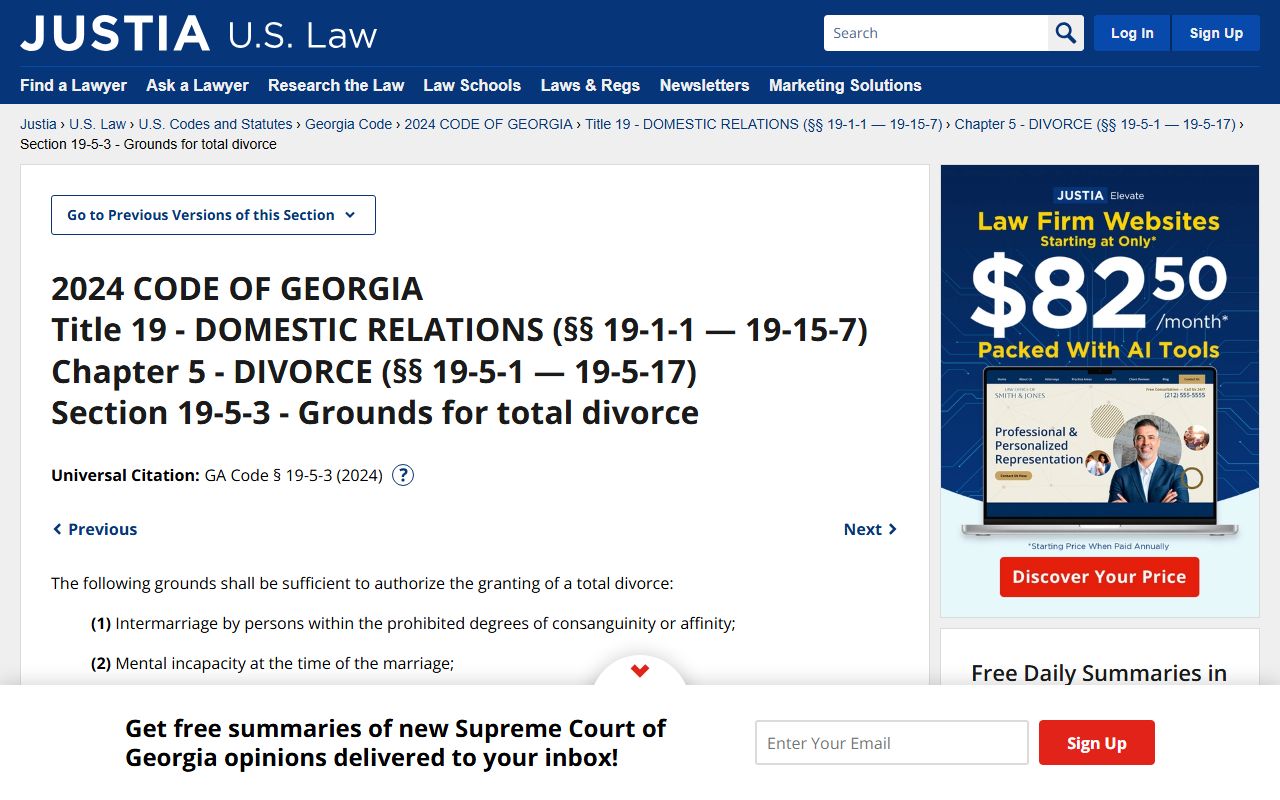
Georgia law provides multiple grounds for divorce. The no-fault option, that the marriage is irretrievably broken, is the most common in Spalding County cases.
Spalding County Divorce Decree Fees
Copy fees at the Spalding County Clerk of Superior Court follow standard Georgia rates. Plain document copies generally cost between $0.50 and $2.50 per page. Certified copies are priced higher because the clerk's official seal and signature are added. That certification makes the document usable in legal proceedings, government applications, and name change requests. Always specify that you want a certified copy if you plan to use the document officially, not just for personal reference.
The Georgia Department of Public Health provides divorce verification services for records from 1952 to 1996. Contact them at 1680 Phoenix Blvd, Suite 100, Atlanta, GA 30349, or call (404) 657-2700. Visit the Vital Records page to see how to submit a request. The DPH confirms only that a divorce was registered in Georgia during those years. For the full decree or terms of the divorce, the Spalding County clerk is the proper source, regardless of the year.
Georgia Divorce Laws That Apply in Spalding County
Georgia law governs all divorces filed in the state, and the rules are the same in Spalding County as anywhere else. The residency requirement under OCGA 19-5-2 says at least one spouse must have been a Georgia resident for six months before filing. The case is filed in the Superior Court of the county where you or your spouse lives. You do not file where the marriage took place.
Under OCGA 19-5-3, Georgia lists 13 grounds for divorce. The no-fault ground, which states the marriage is irretrievably broken, is by far the most commonly used in Spalding County. No proof of fault by either spouse is needed. Other grounds such as adultery, cruel treatment, habitual intoxication, and willful desertion require more evidence. In uncontested divorces, the no-fault ground keeps proceedings simpler for both parties.
Once the case is filed and the other spouse is served, Georgia law requires a minimum 30-day waiting period before a final decree can be issued. This is mandatory even when both parties agree on every term. The Georgia Courts self-help portal has official forms for people representing themselves. OCGA 19-5-1 establishes Superior Court jurisdiction over divorce actions throughout Georgia.
Public Access to Spalding County Divorce Records
The Georgia Open Records Act makes most court records available to the public. Divorce decrees filed in Spalding County Superior Court are public documents. Any person can submit a request to the clerk's office and receive copies after paying the applicable fees. You do not need to state a reason for your request or have any connection to the case.
Records can be sealed. Courts seal case files when they contain sensitive information about minor children, financial data posing fraud risks, or when parties have requested sealing and the court approved. A sealed file is acknowledged as existing, but the clerk will not release its contents without a court order. Most routine divorce cases in Spalding County are not sealed, and a standard records request provides full access to the available documents in those files.
Legal Help in Spalding County
Georgia Legal Services Program provides free legal assistance to income-eligible residents throughout Georgia, including Spalding County. They handle divorce, custody, and support matters. Check online or call to see if you qualify. Georgia Legal Aid offers online self-help resources and guides for people navigating Georgia family law without an attorney.
For contested cases involving substantial property or custody disputes, the State Bar of Georgia runs a lawyer referral service connecting people with licensed family law attorneys. Griffin has several local attorneys who practice family law. The Georgia Courts website provides forms, court contacts, and resources for self-represented litigants in Superior Court proceedings statewide.