
Search Screven County Divorce Decrees
Screven County divorce decree records are maintained by the Clerk of Superior Court in Sylvania, Georgia. The clerk's office holds certified copies of all final divorce orders, full case files, and the docket of every divorce action filed in the county. Whether you need a copy for a name change, a legal proceeding, or personal records, this guide covers how to request Screven County divorce records, what the records contain, applicable fees, and how Georgia law governs the process.
Screven County Divorce Decree Quick Facts
How to Get Screven County Divorce Decrees
The Screven County Clerk of Superior Court is at 216 Mims Road, Sylvania, GA 30467. Call (912) 564-2617 to confirm office hours or ask specific questions before making the trip. The Screven County website may have updated contact details and service information. In-person requests are generally handled the same day when staff can locate the record quickly.
When you request a divorce decree, give staff as much detail as possible. The full legal names of both spouses and the approximate year of the divorce are the most helpful. A case number, if you have it, will get you to the file fastest. Photo ID is standard for any records request, particularly if you are requesting your own file. For certified copies, let the clerk know upfront, as those take slightly longer to prepare and cost a bit more than plain copies.
Mail requests work too. Write to the clerk's office, explain what you need, and ask for a current fee schedule before you send payment. Expect a slower turnaround compared to visiting in person.
What Screven County Divorce Records Contain
The full divorce case file at the Screven County courthouse contains far more than the final decree. You will find the original petition for divorce, any response filed by the other spouse, financial affidavits showing each party's income and assets, motions filed during the case, and any temporary orders the court entered while the case was pending. The final decree itself is the most important document. It is the judge's signed order that ends the marriage and sets out all the terms the court approved.
Those terms can cover a wide range of issues. Property division is usually addressed: who gets the house, the cars, the savings accounts. Debt assignment tells each party what they owe. If alimony is awarded, the decree states the amount and duration. In cases with minor children, the decree includes a parenting plan covering legal custody, physical custody, and a visitation schedule. Child support is also set in the decree when applicable. Any party who later fails to follow these terms can be taken back to court.
A short divorce certificate from the Georgia Department of Public Health is a separate document. It only confirms the fact of divorce, not the terms. If you need the terms, you need the decree from Screven County Superior Court.
Screven County Divorce Decree Fees
The Screven County Clerk of Superior Court charges per-page fees for copies of divorce records. Standard copies run between $0.50 and $2.50 per page in most Georgia counties. Certified copies cost a bit more because the clerk's seal and signature are added. That certification matters when you plan to use the document in another legal proceeding, apply for a name change, or submit it to a government agency. Ask for a certified copy if you have any doubt about what form you need.
If the divorce you are researching took place between 1952 and 1996, the Georgia Department of Public Health can verify that a divorce was recorded in the state. Their Vital Records office is at 1680 Phoenix Blvd, Suite 100, Atlanta, GA 30349, and can be reached at (404) 657-2700. The DPH Vital Records page explains how to request a verification. This service does not provide a copy of the decree or its terms, but it can confirm the basic fact of divorce and help you identify which county to contact for more details.
Georgia Divorce Laws in Screven County
Georgia law controls how divorces are filed and processed throughout the state, and Screven County operates under the same rules as every other Georgia county. The residency requirement is central: at least one spouse must have lived in Georgia for six months before a divorce petition can be filed. This rule appears in OCGA 19-5-2. You file in the Superior Court of the county where you live or where your spouse lives.
Georgia recognizes 13 grounds for divorce under OCGA 19-5-3. The no-fault ground, that the marriage is irretrievably broken, is by far the most common choice in Georgia courts. It requires no proof of wrongdoing by either party. Other grounds include adultery, habitual drunkenness, willful desertion, and cruel treatment. Most uncontested divorces in Screven County use the no-fault ground because it simplifies the case and avoids blame.
Once the petition is filed and served, a 30-day waiting period runs before the court can enter a final order. Even if both spouses fully agree on everything, this period is mandatory. After 30 days, the case can proceed. Self-represented parties should visit the Georgia Courts self-help forms page for official forms. Superior Court jurisdiction over divorce actions statewide is established by OCGA 19-5-1.
Georgia's divorce statutes, including the grounds listed under OCGA 19-5-3, are published in full through the Justia legal database.
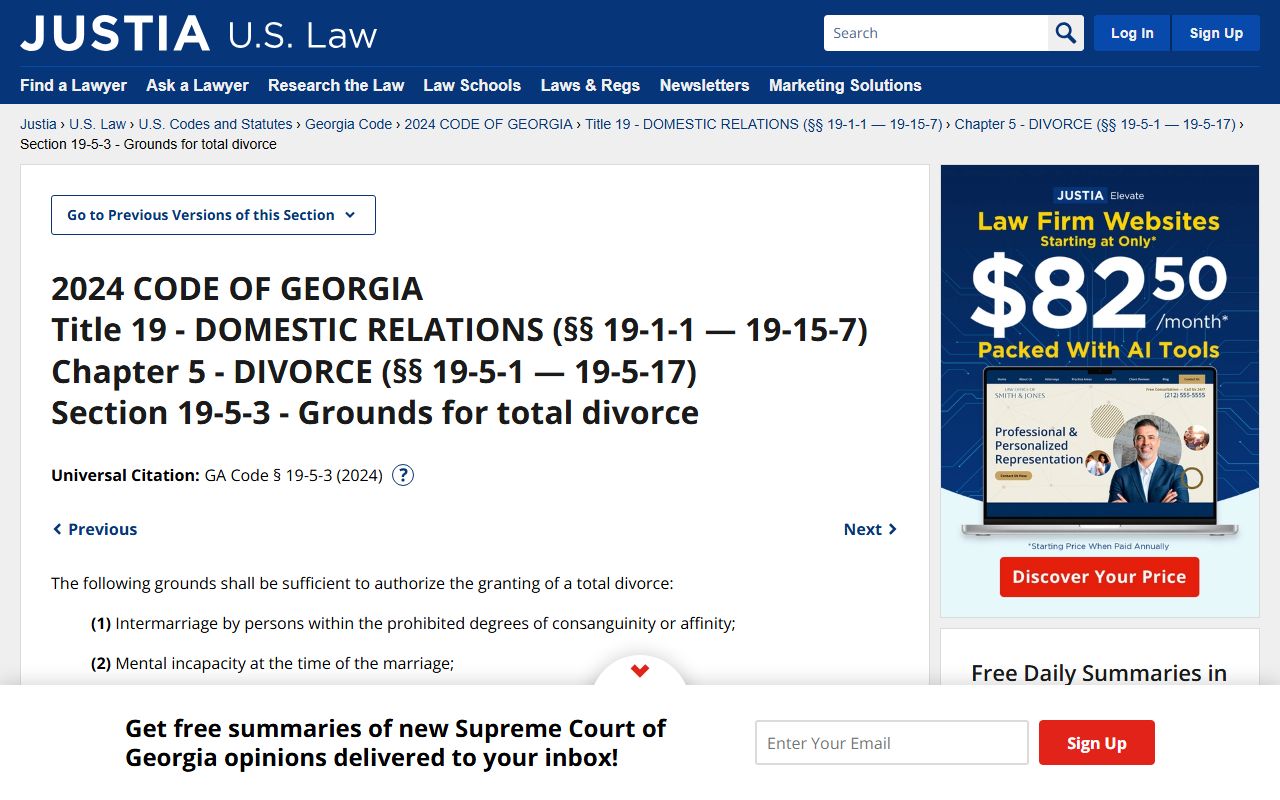
State law sets out all 13 recognized grounds for divorce in Georgia, with the no-fault option being the most widely used in Screven County cases.
Public Access to Screven County Divorce Records
The Georgia Open Records Act establishes the right of any person to inspect or copy public records, including court filings. Divorce decrees filed in Screven County Superior Court are public records. You do not need to show a connection to the case or give a reason for your request. The clerk processes the request, locates the file, and provides copies once you pay the applicable fee.
Some case files are sealed. Courts can seal records when they contain information about minor children that could cause harm if disclosed, when financial data poses a fraud risk, or when the parties have agreed to sealing and the court has approved it. A sealed case will be acknowledged as existing, but the contents will not be released without a court order. For the great majority of divorce cases in Screven County, no sealing order exists and the records are fully accessible through a standard public records request.
Legal Help in Screven County
Georgia Legal Services Program provides free legal assistance to income-eligible residents in rural parts of Georgia, including Screven County. They handle family law matters including divorce, custody, and support. You can apply online or by phone to find out if you qualify. For online self-help tools and plain-language guides to Georgia divorce law, Georgia Legal Aid is a useful resource that does not require income qualification.
If your divorce is contested or involves significant assets, consider using the State Bar of Georgia's lawyer referral service to find a licensed family law attorney. The Georgia Courts website also has court contact directories, official forms, and information for self-represented parties navigating Superior Court proceedings.