
Newton County Divorce Decree Records
Newton County divorce decree records are held at the Clerk of Superior Court in Covington, Georgia, where all divorce cases filed in the county are maintained as permanent public records. The clerk's office is the only place to get a certified copy of a divorce decree in Newton County, and most records are open to any member of the public under Georgia's Open Records Act. This guide covers how to request records, what those records contain, what fees apply, and where to turn for legal help if you need it.
Newton County Divorce Decree Quick Facts
How to Get Newton County Divorce Decrees
The Newton County Clerk of Superior Court is located at 1132 Usher Street, Covington, GA 30014. You can call the office at (770) 784-2035 or visit the Newton County official website for current hours and service updates. In-person requests are the fastest way to get a certified copy of a divorce decree. Staff can search the index by party name or case number and pull the file right away.
When you visit, bring photo ID and as much information as you have about the case. The full legal names of both parties and the approximate year of divorce are usually enough to locate the record. A case number speeds things up, but it is not required. If you need records by mail, write to the clerk's office at the address above. Include the names, the year, and a self-addressed stamped envelope. Ask about current copy fees when you call, since fees can change. Processing time for mail requests is longer than in-person visits, so plan accordingly.
Some older Newton County divorce records may not be available in digital form. Staff can still search physical index books for older cases, but retrieval may take additional time. Call ahead for cases from before the 1980s.
What Newton County Divorce Records Include
A divorce decree from Newton County Superior Court is a final court order that ends a marriage. The decree itself is usually just a few pages, but the full case file can be much longer. The decree names both parties, states the date the divorce was granted, and sets out the court's rulings on all issues in the case.
Most Newton County divorce files contain the original petition, the other party's response (if one was filed), any temporary orders the judge signed during the case, financial disclosures, and the final decree. If the couple had children, the file will include a parenting plan and any child support order. Property settlements and debt division agreements are often attached as exhibits. These documents are part of the public case file and can be reviewed or copied at the clerk's office. Certain parts of a file, such as information about minor children, may be partially sealed under court rules, but the decree itself is typically fully public.
If you only need proof that a divorce happened, the clerk can issue a certified copy of the final decree. That is the document most agencies and courts will accept for legal purposes.
Newton County Divorce Decree Fees
The Newton County Clerk of Superior Court charges fees for copies of divorce records. Certified copies of a final decree typically cost more than plain (uncertified) copies. Georgia clerks set their own fee schedules within limits set by state law, so exact amounts can vary. Call (770) 784-2035 before your visit to get current pricing.
For most purposes, a certified copy is what you need. A plain photocopy is cheaper and fine for personal reference, but banks, courts, government agencies, and other institutions usually require a certified version with the clerk's seal. If you need multiple certified copies, ask whether the clerk offers a reduced rate for additional copies ordered at the same time. Payment is typically accepted by cash or check at the counter. Remote or mail requests may require a money order. The clerk's office can tell you exactly what forms of payment they accept.
There is no fee to search the public index and view a file in person at the courthouse. Copy charges apply when you want to take documents with you.
Georgia Divorce Laws That Apply in Newton County
Divorce in Newton County follows the same Georgia statutes that apply across the state. To file here, at least one spouse must have lived in Georgia for six months before filing. That residency requirement comes from OCGA 19-5-2. Newton County itself must be the proper venue, which generally means the defendant spouse lives here, or both parties agree to file here.
Georgia law lists thirteen grounds for divorce under OCGA 19-5-3. The most common ground used in Newton County, as in the rest of the state, is irretrievable breakdown of the marriage, which is the no-fault option. No-fault means neither party has to prove wrongdoing; you just have to show the marriage is over. The other twelve grounds are fault-based and include adultery, desertion, and cruel treatment. Choosing a fault ground can affect how the court divides property and awards alimony, but most couples in Newton County use no-fault because it is simpler and faster.
After the judge signs the final decree, there is a mandatory 30-day waiting period before the divorce is fully final. Either party can appeal within that window. Once the 30 days pass without an appeal, the divorce is absolute. The basic definition of what a divorce is and what it does is found in OCGA 19-5-1.
Newton County divorce records are public under the Georgia Open Records Act. Anyone can request them. You do not need to be a party to the case.
Accessing Newton County Divorce Records Online
The Georgia Courts website provides links to court resources and general guidance about accessing records. Some Georgia Superior Courts offer online case search tools, but availability varies by county. Check the Newton County court's web page to see if an online docket search is currently available for divorce cases filed there.
For divorces that took place between 1952 and 1996, the Georgia Department of Public Health maintains a separate verification database. The DPH vital records office is at 1680 Phoenix Boulevard, Suite 100, Atlanta, GA 30349, and can be reached at (404) 657-2700. Their website is dph.georgia.gov/VitalRecords. Note that DPH only provides verification, not certified copies of the actual decree. The Superior Court clerk is the only source for a certified copy of the full divorce decree for Newton County cases.
The image below shows the Newton County Clerk of Superior Court's online presence, which is the primary point of contact for divorce decree records in the county.
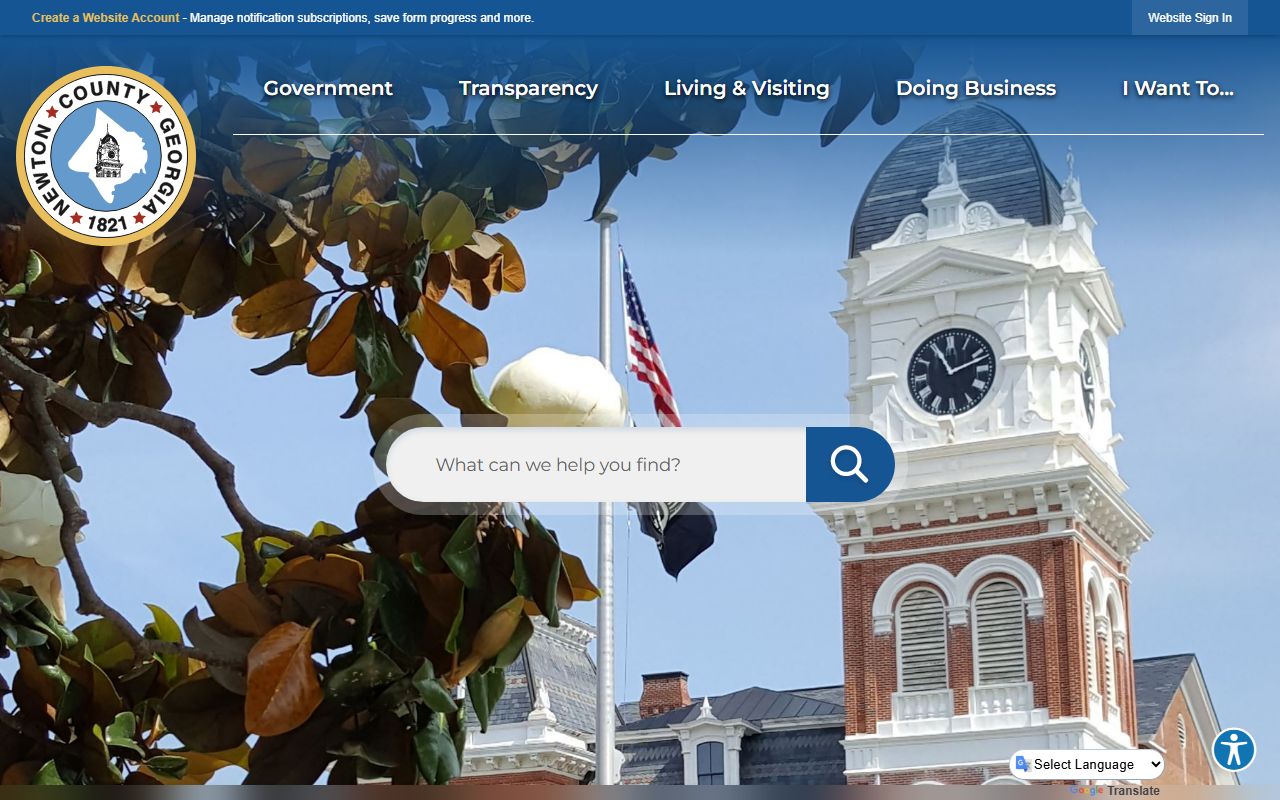
If you cannot find what you need through the county's online tools, an in-person visit to the Covington courthouse remains the most reliable option. The clerk's office staff can conduct index searches and retrieve case files while you wait.
Legal Help for Newton County Divorce Cases
If you need help with a divorce in Newton County, several free and low-cost legal resources serve this area. The Georgia Legal Aid program offers help to qualifying individuals, and income-based eligibility applies. Georgia Legal Services Program is another option, particularly for residents in rural parts of the state. Both organizations can help with divorce paperwork and court procedures.
The Georgia Courts self-help center has downloadable divorce forms that are accepted in all Georgia Superior Courts, including Newton County. These forms cover uncontested divorces with and without children. You fill them out, file them with the clerk, serve the other party, and attend a short hearing. This route works well for straightforward cases where both parties agree on all issues.
For more complex situations, the State Bar of Georgia has a lawyer referral service that can connect you with a family law attorney who practices in Newton County. A paid consultation with an attorney is worth it when the case involves contested property, children, or significant assets. The clerk's office can tell you what forms to file but cannot give legal advice.