
Heard County Divorce Decree Records
Heard County divorce decree records are on file at the Clerk of Superior Court in Franklin, Georgia, and are open to the public under the Georgia Open Records Act. Whether you need a certified copy of a final decree for legal purposes, want to verify that a divorce was finalized in this county, or need to search a case by name, the clerk's office in Franklin is the place to start. This page explains how to access Heard County divorce records, what those records contain, what fees apply, and how Georgia law governs divorce cases filed here.
Heard County Divorce Decree Quick Facts
How to Get Heard County Divorce Decrees
The Heard County Clerk of Superior Court is the official keeper of all divorce records in the county. The office is at 215 E. Court Square, Franklin, GA 30217. Phone: (706) 675-3301. The Heard County website may list current office hours and contact information. Visiting in person is the fastest way to get a certified copy of a divorce decree.
When you visit, bring the full legal names of both parties and the approximate year of the divorce. If you have a case number, that will speed things up. A valid photo ID is standard practice for records requests. If you cannot make an in-person trip, written mail requests are accepted. Write to 215 E. Court Square, Franklin, GA 30217, describe the specific record you need, and include your contact information and a self-addressed stamped envelope. Call the office beforehand to confirm current fees and payment methods. Certified copies carry an official seal and cost more than plain photocopies. The total depends on how many pages are in the file.
Heard County is a small county with limited courthouse staff. Calling ahead is a good idea both to confirm hours and to let staff know what you are looking for. That can reduce your wait time considerably.
The Georgia Courts website is a helpful resource for understanding how divorce cases move through the Superior Court system in Georgia, including the records structure used statewide.
What Heard County Divorce Records Contain
A complete Heard County divorce case file includes all documents filed during the proceedings. That means the original petition, any response from the other spouse, temporary orders issued during the case, financial affidavits, consent agreements or settlement documents, and the final decree signed by the judge. The clerk stores these under the case number assigned when the petition was first filed.
The final decree is what most people need. It is the court's official order ending the marriage. The decree names both parties, states the date of dissolution, and spells out the terms the court ordered or the parties agreed to. Property division, debt allocation, and spousal support are all addressed when those issues were part of the case. If children were involved, custody and support terms appear in the decree as well. Name restoration requests show up in the decree too. All of this is public record in most cases. A specific court order is required to seal any part of the file, and that does not happen automatically.
For verification purposes covering the 1952 to 1996 period, the Georgia Department of Public Health Vital Records office maintains a statewide index. Reach them at 1680 Phoenix Blvd, Suite 100, Atlanta, GA 30349, or call (404) 657-2700. For the actual decree or for divorces outside that date range, the Heard County Clerk of Superior Court is the official source.
Heard County Divorce Decree Fees
The clerk's office charges fees to cover the cost of locating and reproducing records. Certified copies are more expensive than plain copies because of the seal and signature that confirm authenticity. Call (706) 675-3301 before your visit to get current pricing. The total depends on how many pages are in the file, so having the case number in advance helps estimate the cost.
Filing a new divorce case in Heard County requires paying a Superior Court filing fee at submission. These fees vary but generally run a few hundred dollars in Georgia. If the cost is a barrier, Georgia courts allow petitioners to submit a Pauper's Affidavit, a sworn statement of financial hardship. If approved by the court, fees may be reduced or waived. Ask the Heard County clerk how to request one. Free, state-approved divorce forms are available through the Georgia Courts self-help page. Starting with the right forms reduces the risk of rejection at filing.
Georgia Divorce Law in Heard County
Georgia's divorce statutes apply the same way in Heard County as across the rest of the state. Residency is the first requirement. Under OCGA 19-5-2, at least one spouse must have lived in Georgia for six months before filing. Heard County Superior Court has jurisdiction when the petitioning spouse has established residency here during that period. The clock starts from when the person moved to the state and must reach six months before the petition is filed, not before the case concludes.
Georgia recognizes thirteen grounds for divorce under OCGA 19-5-3. The no-fault ground, that the marriage is "irretrievably broken," is the most commonly used in Heard County and throughout Georgia. It does not require proving misconduct by either party. Fault grounds like adultery, desertion, cruel treatment, and habitual intoxication are available and can matter to judges deciding property and support issues. But proving fault adds time and cost. Most couples in uncontested cases go with the no-fault route.
After filing and service, Georgia requires a 30-day waiting period before the court can enter a final decree. OCGA 19-5-1 defines divorce under Georgia law, and OCGA 19-5-5 governs the petition requirements and court procedures. Uncontested cases with complete paperwork and no disputed issues can wrap up in Heard County Superior Court relatively quickly after that mandatory window closes.
Public Access to Heard Divorce Records
Georgia's Open Records Act (OCGA 50-18-70) makes most government records open for public inspection. Divorce case files at the Heard County Clerk of Superior Court are public records. Any member of the public can request to view or copy them, regardless of whether they were a party to the divorce.
Exceptions exist for records involving minor children, which can be partially sealed by court order. Some financial exhibits may also carry access restrictions. But the standard is openness, and most Heard County divorce records are fully accessible. If you are searching from outside the area, contact the clerk at (706) 675-3301 to ask what options are available for remote or mail-based access to records.
The Georgia Courts portal provides statewide information on Superior Court operations, court locations, and how to access public court records including divorce decrees in all 159 Georgia counties.
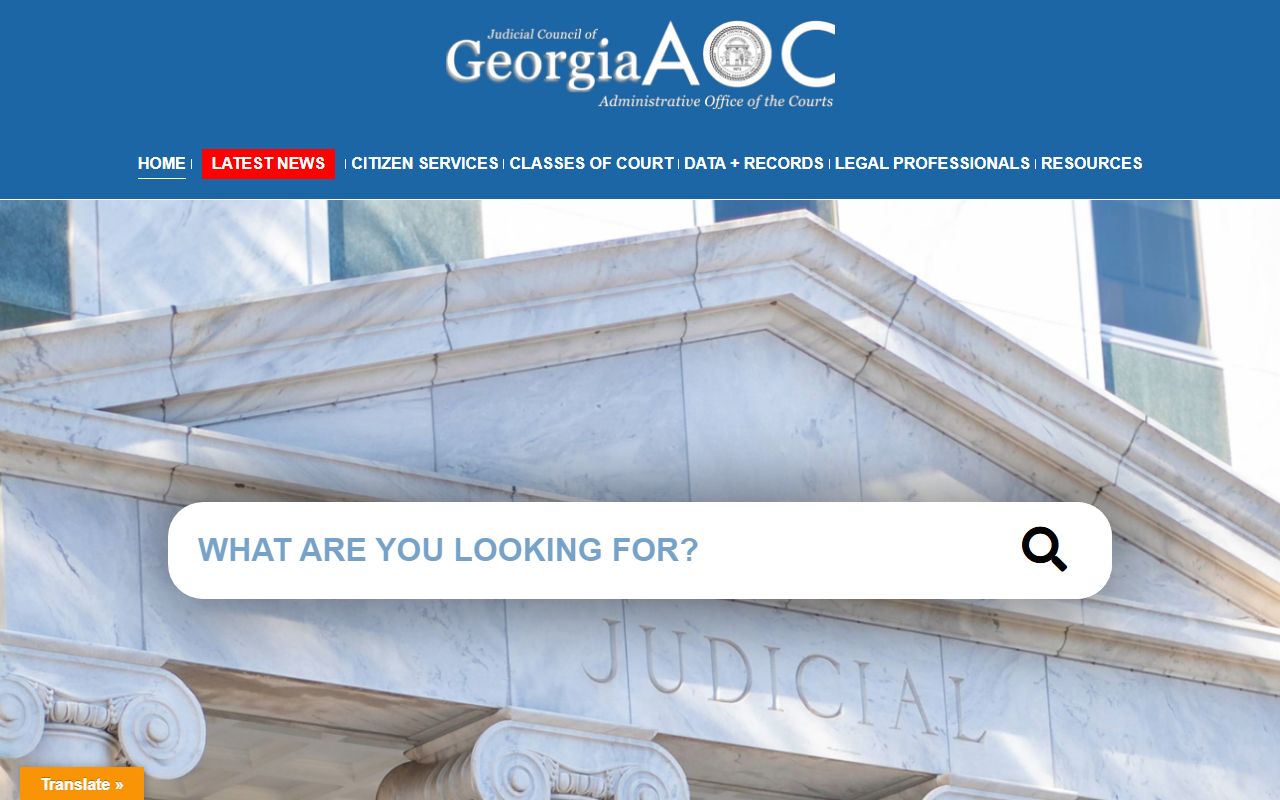
Georgia Courts offers filing guides, self-help forms, and court location information for residents of Heard County and all other Georgia counties navigating the divorce process.
Legal Help in Heard County
Straightforward, uncontested divorces can be handled without a lawyer when both parties agree on everything. The free forms from the Georgia Courts site help self-represented parties get the paperwork right. When there are disagreements over property, children, or money, legal help is worth the cost.
The State Bar of Georgia runs a referral service that connects residents with family law attorneys serving this area. For those who cannot afford legal fees, Georgia Legal Services Program serves rural counties like Heard and may assist qualifying residents with divorce matters. Georgia Legal Aid accepts online applications for family law cases. Both programs have income limits. Ask the Heard County clerk's office whether any self-help materials are available at the Franklin courthouse for self-represented parties.