
Find Charlton County Divorce Decrees
Charlton County divorce decree records are held by the Clerk of Superior Court in Folkston, Georgia. The clerk's office is the official source for all divorce case documents in the county, including final decrees, petitions, and supporting court records. Georgia's Open Records Act makes these records publicly accessible. This page covers how to request a Charlton County divorce decree, what the records include, costs, state law, and legal resources for residents.
Charlton County Divorce Decree Quick Facts
How to Get Charlton County Divorce Records
The Charlton County Clerk of Superior Court is at 1520 3rd Street, Folkston, GA 31537. Call (912) 496-2354 to check hours and ask about available records. The Charlton County government website provides contact information for the court clerk's office. For most people, visiting the Folkston courthouse in person is the quickest way to get a copy of a divorce decree.
When you visit, bring the full names of both parties and the year the divorce was filed. If you have a case number, bring that too. Valid photo ID is standard. Staff will search the record index and let you know what documents are available and what they cost. For mail requests, write the clerk with clear case details, include a self-addressed envelope, and call ahead to ask about payment. Charlton is a small, rural county, so call before making a long drive to confirm hours.
Note: Older records, particularly those from before electronic filing was adopted, may need extra time to locate from archived paper files.
What Charlton County Divorce Decrees Include
The Charlton County Superior Court divorce decree is the final court order that legally ends a marriage. It is detailed and legally binding. The decree states how property is divided, whether alimony is ordered and for how long, and the custody and visitation schedule for children if any were involved. Once the judge signs the decree and it is filed, both parties are bound by its terms. Violations can be addressed through enforcement proceedings back in Superior Court.
The full divorce case file at the Charlton County clerk's office goes further. It includes the original petition, service documents, any temporary orders issued while the case was pending, financial affidavits, and the signed final settlement if the case was uncontested. Contested cases may have motions, exhibits, and written rulings. This is very different from the Georgia Department of Public Health's divorce certificate. The DPH certificate covers only divorces registered in Georgia between 1952 and 1996, and it only confirms the divorce occurred. It has no case terms, no property division details, and no custody information. Only the Charlton County clerk holds those records.
Charlton County Divorce Decree Fees
The Charlton County Clerk of Superior Court charges copy fees consistent with Georgia court standards. Plain copies are typically $0.50 to $1.00 per page. Certified copies cost more because they include the clerk's official seal and are required for legal filings, proof of marital status, name changes, and similar uses. Ask staff for the current fee schedule when you call or visit before traveling to Folkston.
For a simple verification of whether a divorce was recorded in Georgia between 1952 and 1996, the Georgia DPH Vital Records office can help. Contact them at 1680 Phoenix Blvd, Suite 100, Atlanta, GA 30349, or by phone at (404) 657-2700. Visit dph.georgia.gov/VitalRecords for more information on their verification service. This is a state-level service that does not provide decree terms or full case records.
Georgia Divorce Law in Charlton County
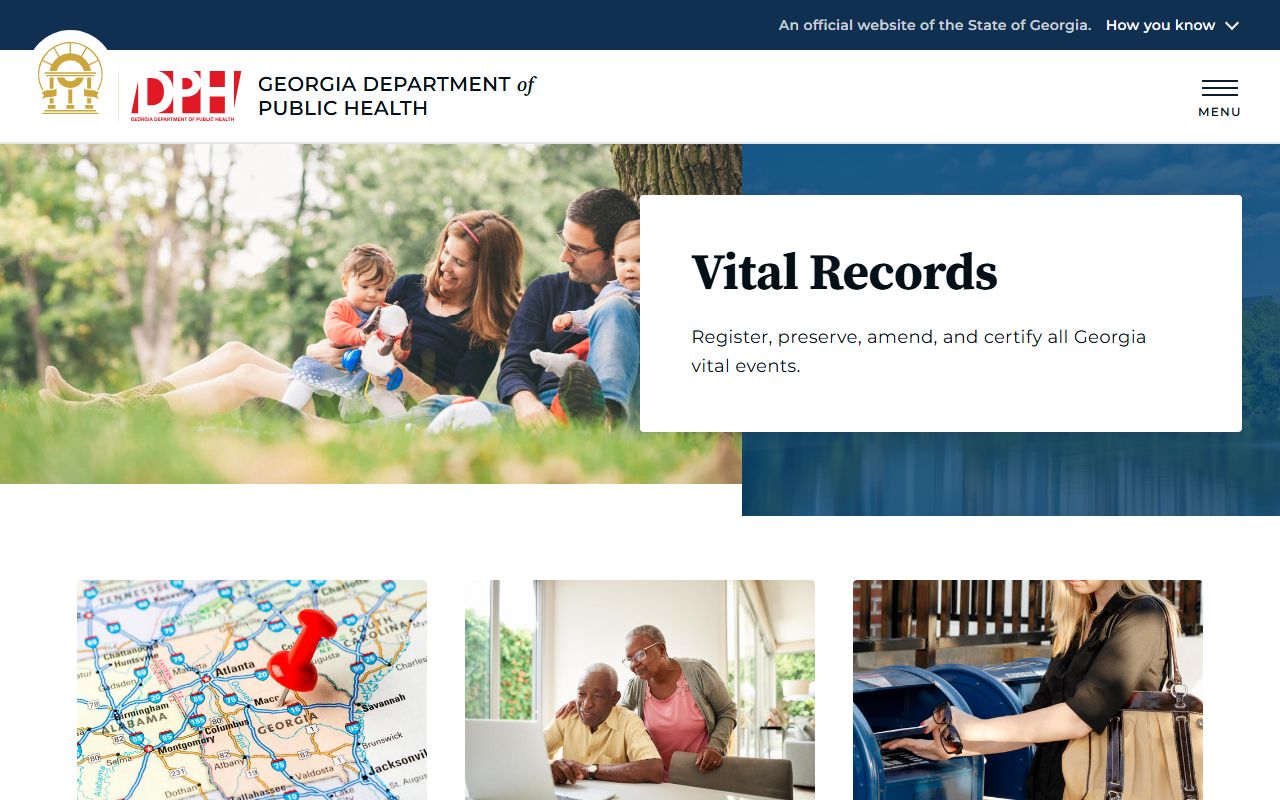
The Georgia DPH Vital Records office at dph.georgia.gov maintains the statewide divorce verification index from 1952 to 1996. The image below shows how that resource appears to users searching for records.
All Georgia divorces, including those in Charlton County, fall under state law. Under OCGA 19-5-1, the Superior Court has exclusive jurisdiction over divorce actions. Before filing, at least one spouse must have been a Georgia resident for six months, as required by OCGA 19-5-2. The petition is filed in the county where either spouse lives.
Georgia's 13 grounds for divorce are listed in OCGA 19-5-3. Most Charlton County cases use the no-fault ground, that the marriage is irretrievably broken. After the respondent is served, a 30-day waiting period applies before the judge can enter the final decree. Self-represented filers can download forms from the Georgia Courts self-help page.
Public Access to Charlton County Divorce Records
The Georgia Open Records Act makes divorce decree records available to any member of the public. You do not need to be a party to the case or have a legal interest in it. The Charlton County Clerk of Superior Court is required to respond to public records requests and provide copies for the applicable fee.
Records can be sealed in limited circumstances. Courts seal records to protect minor children, to shield sensitive financial information from public disclosure, or when both parties agree and the court finds cause. If sealed, the clerk confirms the case exists but cannot provide sealed documents without a court order. This is rare for routine divorce cases. The vast majority of Charlton County divorce decrees are public and accessible to anyone who submits a request.
Note: For cases where the parties have common surnames, bring additional identifying details such as a date of birth or former address to help staff distinguish between similar records.
Legal Help for Charlton County Divorce Cases
Georgia Legal Services Program covers Charlton County and the surrounding rural areas of southeast Georgia. Eligible low-income residents can receive free civil legal help with divorce, custody, and support matters. Contact them by phone or apply through their website to check eligibility. Most qualifying residents live in households at or below a specified income threshold based on family size.
For self-directed research and filing, Georgia Legal Aid offers free online guides and forms tailored to Georgia's courts. These tools work well for uncontested divorces where both parties have already agreed on all issues. If your case involves a dispute over property, custody, or support, getting professional legal advice is a good idea. The State Bar of Georgia runs a referral service to connect Georgians with licensed family law attorneys. The Georgia Courts site also lists court contact information across all 159 counties.