
Evans Georgia Divorce Decree
Evans divorce decree records are held by the Columbia County Superior Court, and the courthouse is located in Evans itself at 640 Ronald Reagan Drive, which makes it easy for local residents to request records without leaving the city. Whether you need to search for a past divorce decree, get a certified copy, or understand how Georgia's divorce process works in Columbia County, this guide covers what you need to know.
Evans Divorce Decree Quick Facts
Columbia County Superior Court in Evans
The Columbia County Superior Court Clerk handles all divorce filings and records for Evans and the rest of Columbia County. The courthouse is at 640 Ronald Reagan Drive, Evans, GA 30809. You can reach the clerk's office by calling (706) 312-7342, and the county website is at columbiacountyga.gov.
Evans is actually home to the Columbia County courthouse, so residents don't face the inconvenience of traveling to a distant county seat. That makes in-person requests straightforward. When you go, bring both parties' full names and, if possible, the case number or year the divorce was finalized. Certified copies are the typical request for official use, while plain copies cost less but may not be accepted by lenders, title companies, or government agencies.
For older cases, some records may be stored in a different format or location. Call the clerk ahead of your visit if you are searching for a divorce from more than 15 or 20 years ago. Staff can let you know in advance whether retrieval will take extra time. Note: The clerk's fee schedule is listed on the Columbia County website; check it before your visit to bring the right payment.
The Columbia County Clerk of Superior Court website, shown below, is where Evans residents start when requesting divorce decree records. Go to columbiacountyga.gov for current hours, contact details, and records request procedures.
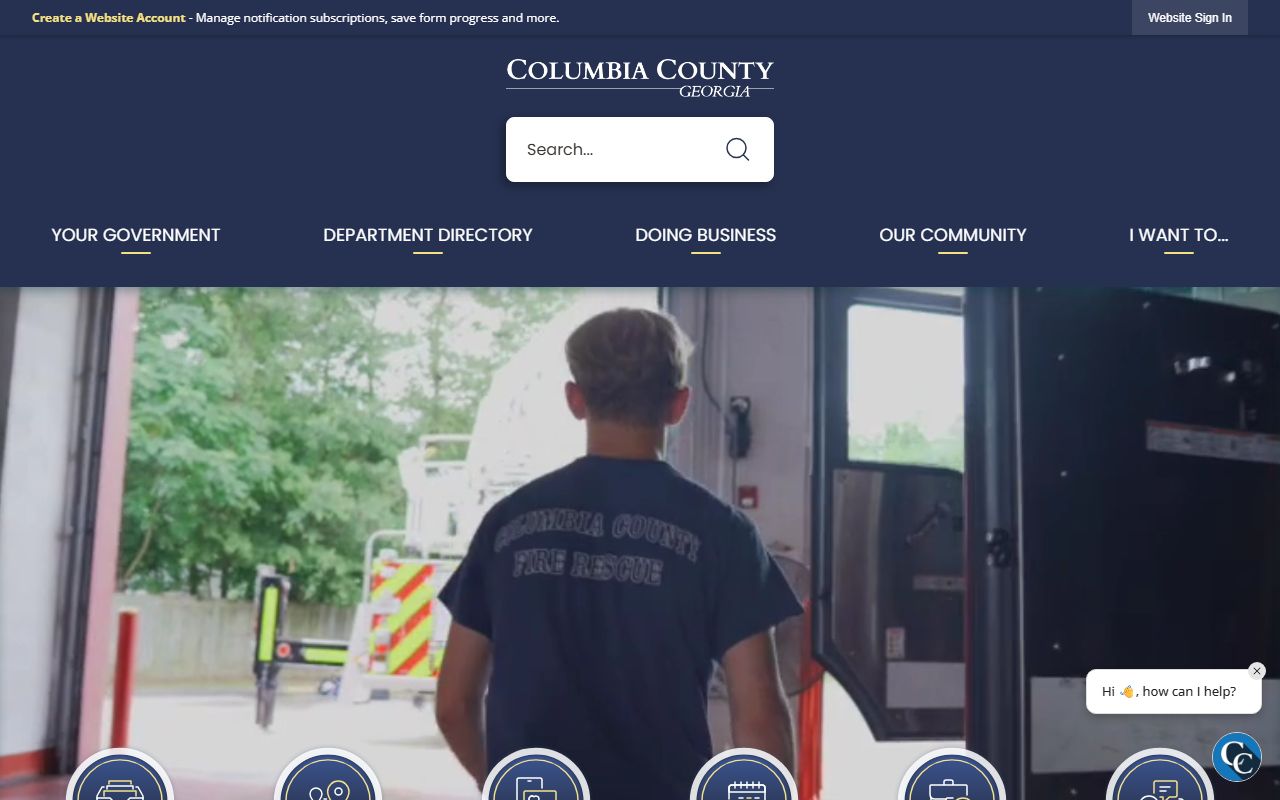
The screenshot shows the Columbia County government website, which provides access to the Superior Court Clerk's office and information about requesting Evans divorce decree copies and case records.
What a Divorce Decree Contains
A divorce decree is the final signed order from the Superior Court judge. It is the legal proof that a marriage has been dissolved. At a minimum, the decree names both spouses, identifies the court and judge, and gives the date the divorce was granted. For simple cases, that may be most of it.
When children are involved, the decree includes custody terms. It will state which parent has legal custody, what the parenting schedule looks like, and what child support is ordered. If the couple had shared property, the decree says how it was divided: who gets the house, cars, bank accounts, and retirement accounts, and who is responsible for which debts. Alimony, when ordered, appears with the specific terms. All of this becomes a binding court order the moment the judge signs.
The full case file holds more: the petition, financial affidavits, any settlement agreement the parties signed, motions, and interim orders. If you need specific information beyond the final decree, ask the clerk about accessing the full case file. The cost depends on what you request and how many pages are involved.
Georgia Divorce Law in Columbia County
Georgia divorce cases are governed by Title 19, Chapter 5 of the state code. Under OCGA 19-5-1, only the Superior Court can grant a divorce in Georgia. Every divorce filed by an Evans resident goes through the Columbia County Superior Court, regardless of whether the case is contested or uncontested.
One spouse must have lived in Georgia for at least six months before filing, per OCGA 19-5-2. New residents who haven't yet reached that threshold will need to wait before their case can be filed in Columbia County. If both spouses have been Georgia residents for six months, the case is typically filed in the county where the petitioner lives.
Georgia lists 13 grounds for divorce in OCGA 19-5-3. Most Columbia County cases use the no-fault ground: "irretrievably broken." It is the simplest path and requires no proof that one party did something wrong. After the other party is served, a 30-day waiting period passes before the court can finalize the divorce. The petition must be in writing and verified, as stated in OCGA 19-5-5.
State DPH Records and Evans Divorces
The Georgia Department of Public Health maintains a divorce index for statewide records from 1952 through 1996. This index helps when you are trying to verify a divorce but don't know which county filed it. The DPH can confirm the event and direct you to the right county. But the DPH does not hold or distribute copies of the actual decrees. As they note, "copies of the records are held by the Clerk of the Superior Court in the county where the divorce was granted."
For Evans cases in that date range, the DPH index can confirm Columbia County. After that, you contact the clerk here for the certified copy. The DPH is located at 1680 Phoenix Boulevard, Suite 100, Atlanta, GA 30349. Their phone is (404) 657-2700, and their records page is at dph.georgia.gov/VitalRecords.
The Georgia DPH Vital Records website, shown here, is the place for statewide divorce verification requests for cases from 1952 to 1996. Visit dph.georgia.gov/VitalRecords for instructions on how to submit a request for a Columbia County verification.
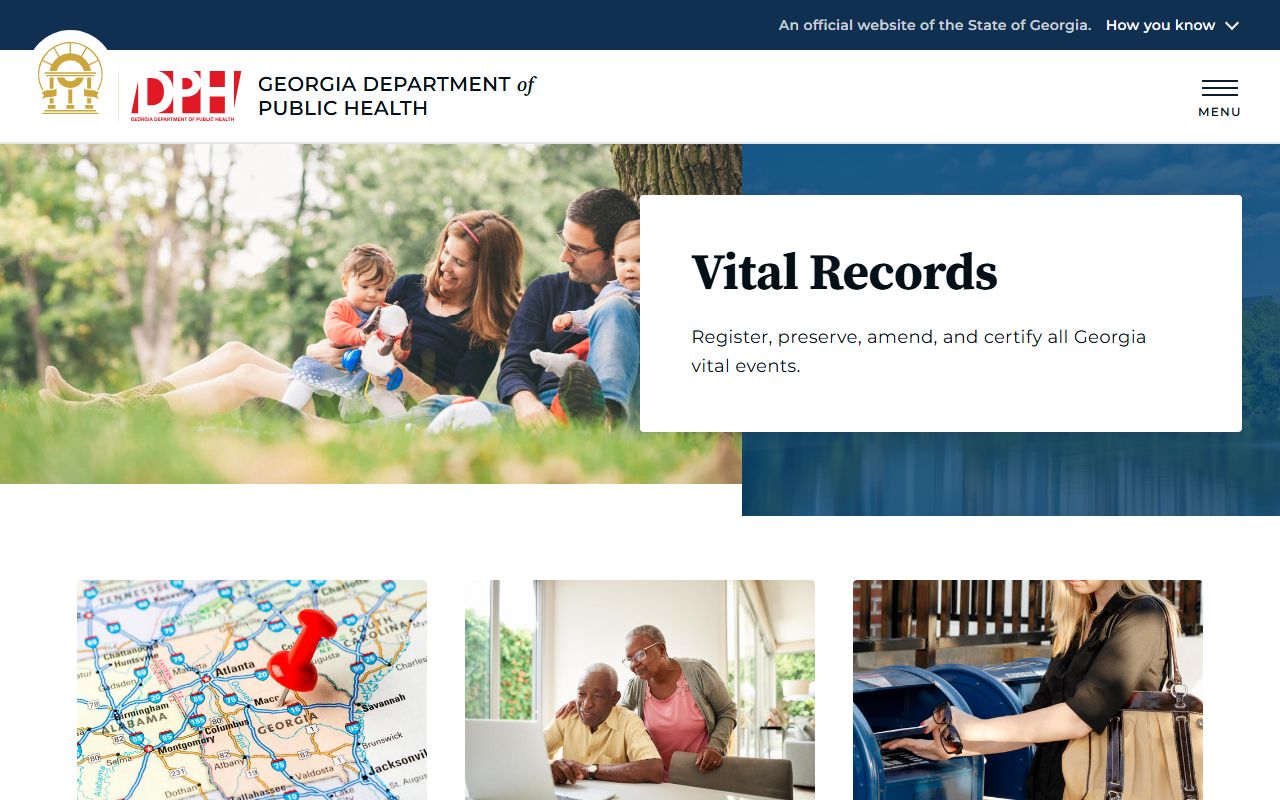
The screenshot shows the Georgia DPH Vital Records main page, used as the entry point for confirming divorces in the statewide index for Columbia County and other Georgia counties.
Public Records Access in Columbia County
Divorce records in Columbia County are public records under Georgia's Open Records Act, OCGA 50-18-70. Any person can request and receive a copy without needing to be a party to the case. You don't have to give a reason. The clerk's office processes public records requests during regular business hours.
A judge can seal a specific file when circumstances justify it, such as protecting information about minor children or sensitive financial data. Sealed records cannot be accessed by the public without a court order. For most Columbia County divorce cases, the records are open. The clerk can confirm whether a file is sealed before you submit a full request. This saves you time if the record turns out to be restricted.
Legal Help Near Evans
Evans and Columbia County residents who need help with a divorce or records request have access to several resources. The Georgia Legal Services Program at glsp.org provides free civil legal assistance to income-qualified residents, including family law help. Georgia Legal Aid at georgialegalaid.org offers online self-help content and referrals.
For professional legal help, the State Bar of Georgia at gabar.org maintains a directory of licensed attorneys organized by location. Family law attorneys who practice in Columbia County will know the local procedures and judges. Standardized Georgia divorce forms for self-represented parties are available at no cost at georgiacourts.gov.